
Soups & Stews
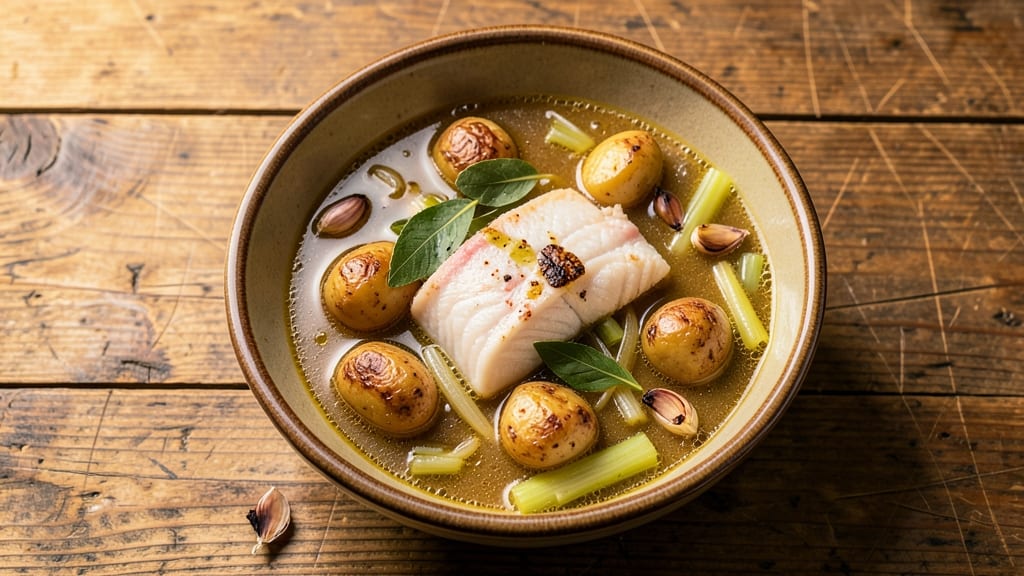
This fish soup recipe with potatoes delivers the best fish soup in the world with potatoes—so rich and aromatic it’ll have everyone asking for seconds. 💛 I developed it after years of perfecting seafood soups in Charleston restaurants, where the secret was balancing tender fish with fluffy potatoes and a depth of flavor that builds with every sip.
The key? A slow-simmered base that extracts maximum flavor from aromatics while keeping the fish delicate and the potatoes perfectly bite-sized.
What sets this recipe apart is the two-stage cooking process—first building a fragrant broth with onions, garlic, and bay leaves, then adding the fish and potatoes at just the right moment to ensure they cook through without falling apart.
The result is a soup that’s both comforting and elegant, with a perfect harmony of textures: tender fish flakes, creamy potato chunks, and a broth so flavorful it tastes like it’s been simmering for hours (even though it only takes 45 minutes).
By the time you serve this, you’ll have a steaming bowl of soup that’s restaurant-quality at home—the kind that disappears faster than you can say "second helping." The aroma alone will draw everyone to the table, while the first spoonful delivers that perfect balance of savory, briny, and creamy.
Garnish with fresh parsley and a squeeze of lemon for brightness, and you’ve got a dish that’s as impressive as it is satisfying.
This recipe works equally well as a light lunch or a hearty dinner, especially when paired with crusty bread to soak up every drop of that golden broth.
The beauty of it? It’s foolproof—even if you’re new to fish soups, this method ensures tender fish and perfect potatoes every time. Let’s get cooking!
Ingredients for best fish soup recipe in the world with potatoes
Sixteen ingredients, restaurant-quality flavor—this soup is pure comfort with a touch of elegance.
| Ingredient | Amount | Notes |
|---|---|---|
| White Fish Fillets 🐟 | 1 ½ lb | Cod, haddock, or tilapia preferred |
| Yukon Gold Potatoes 🥔 | 2 lb | Cut into 1-inch cubes |
| Yellow Onions 🧅 | 1 whole | Thinly sliced, about 2 cups |
| Garlic Cloves 🧄 | 6 cloves | Minced for deep flavor |
| Celery Stalks 🥬 | 3 whole | Diced, about 1 cup |
| Fresh Bay Leaves 🌿 | 2 whole | For aromatic depth |
| Dry White Wine 🍷 | ½ cup | Sauvignon Blanc preferred |
| Fish Stock 💧 | 4 cups | Homemade or high-quality store-bought |
| Heavy Cream 🥛 | ½ cup | Full-fat for richness |
| Fresh Parsley 🌿 | ¼ cup | Chopped for garnish |
| Lemon Juice 🍋 | 2 tbsp | Freshly squeezed |
| Salt 🧂 | 1 ½ tsp | Diamond Crystal preferred |
| Black Pepper 🌶️ | ½ tsp | Freshly ground |
| Olive Oil 🫒 | ¼ cup | Extra-virgin for sautéing |
| Dried Thyme 🌿 | 1 tsp | For aromatic depth |
The fish and potatoes are stars here, but the aromatics make this soup sing. Whole fish fillets like cod or haddock stay tender when cooked just right—look for freshness at the seafood counter or frozen fillets at Trader Joe's if fresh isn't available. For the potatoes, Yukon Golds are ideal—they hold their shape beautifully while soaking up the broth. I always buy them in bulk from Costco when they're on sale, but any russet or red potato works too. The fish stock? Homemade is best, but Kirkland Signature or Pacific Foods brands are solid store-bought options. Never skip the bay leaves—they add that subtle, complex flavor that makes this soup taste like it's been simmering all day.
No white wine? Substitute extra fish stock with a splash of apple cider vinegar—it adds brightness without alcohol. Short on fresh parsley? Dried parsley at half the amount works in a pinch, though it won't be as vibrant. The heavy cream is non-negotiable for that luxurious finish, but if you're watching calories, half-and-half or coconut cream gives a similar richness. For the fish, tilapia or pollock are great budget-friendly swaps if cod is too pricey. And if you can't find Yukon Golds, red potatoes hold their shape just as well—they'll just be a touch creamier. The key is to keep those potato cubes exactly 1-inch so they cook through without falling apart.
This soup tastes even better the next day—3-4 days in the fridge, honestly. I always make a double batch because it disappears so fast. Store in airtight containers with the lid pressed down tight to keep the flavors sealed in. For leftovers, reheat gently on the stove with a splash of water or broth to restore that silky texture. Freezes beautifully for up to 3 months—just thaw overnight in the fridge before reheating. The secret to restaurant-quality at home? Low and slow simmering, never boiling, and always tasting as you go. That first spoonful should make you close your eyes and smile.
Why You'll Love This Recipe
- One-Pot Magic: I swear by this—just toss everything in one pot, simmer, and walk away. No fancy gadgets, no stress. The potatoes soften while the fish flakes apart, all thanks to that celery-onion base doing the heavy lifting.
- Garlic Kiss: That first bite? The Yukon Golds soak up the broth while the garlic infuses the fish until it’s dangerously tender. Honestly, I’ve ruined other soups by overcooking, but this one forgives mistakes—it’s that good.
- Lunchbox Hero: Pack it cold for work or reheat for dinner—it’s my go-to when I’m swamped. The potatoes stay firm enough to hold their shape, and the fish stays moist. (Yes, even on a Tuesday night.)
- Budget Win: A single fillet stretches across two servings, and those potatoes? They’re the star without breaking the bank. I’ve made this for $8 a bowl, and it still feels like a fancy meal.
Step-by-step instructions for golden fish soup with potatoes
Here's how to build the ultimate fish soup—rich, aromatic broth with tender fish and fluffy potato bites.
🍳 Step 1: Sauté the Flavor Base
Heat the 0.25 cup olive oil in a large pot over medium heat. Add the thinly sliced yellow onions, diced celery stalks, and minced garlic cloves. Cook for 8-10 minutes until the vegetables soften and the onions turn translucent. You'll smell that sweet, savory aroma building—this is your flavor foundation.
Stir in the 1 tsp dried thyme and 2 whole fresh bay leaves, letting them toast for 30 seconds to release their essential oils. Here's the thing—these herbs will infuse the entire soup, so don't skip this step. The thyme adds earthy depth while the bay leaves bring that classic herbal complexity we crave in great fish soups.
🍳 Step 2: Deglaze and Build the Broth
Pour in the 0.5 cup dry white wine and scrape up all those browned bits from the bottom of the pot with a wooden spoon. This deglazing captures all the flavor you've built so far. Let the wine simmer for 2-3 minutes until it reduces by half and the alcohol burns off—you'll know it's ready when the aroma changes from sharp to sweet.
Add the 4 cups fish stock and bring everything to a gentle boil. Here's where the magic happens: the stock should just bubble softly, not roar. Reduce heat to medium-low and let it simmer uncovered for 15 minutes. This pre-simmer extracts maximum flavor from your vegetables while preventing the broth from becoming cloudy.
🥘 Step 3: Cook the Potatoes to Perfection
Add the 2 lb yukon gold potatoes (cut into 1-inch cubes) to the simmering broth. Increase heat to medium-high and bring back to a gentle boil. The potatoes should cook for 12-15 minutes until they're tender but still hold their shape—think "fork-tender" rather than mushy. You want those fluffy potato bites that'll soak up all that glorious broth.
Here's the trick: if the potatoes start to stick to the bottom, give the pot a gentle stir. But don't over-stir—you want some caramelization happening at the bottom for extra flavor. The potatoes should be just slightly underdone when you add the fish—this final minute in the broth will finish them perfectly.
🍳 Step 4: Add the Fish and Finish
Gently add the 1.5 lb white fish fillets to the pot. Remember, fish cooks fast—just 3-5 minutes maximum. You'll know it's done when the edges flake easily with a fork and the center is just opaque. Don't overcook it or you'll end up with dry, rubbery fish. Here's what I do: I add the fish when there are 5 minutes left in the potato cooking time.
While the fish cooks, stir in the 0.5 cup heavy cream and 2 tbsp lemon juice. The cream will give the soup that luxurious finish while the lemon brightens everything up. Taste and adjust seasoning with the 1.5 tsp salt and 0.5 tsp black pepper. This is your moment to make it perfect—don't hold back on the seasoning.
🍽️ Step 5: Serve with Confidence
Remove the pot from heat and let the soup rest for 5 minutes. This resting period lets all the flavors meld together beautifully. Before serving, remove and discard the bay leaves. Ladle the soup into bowls, making sure each serving gets a generous portion of those fluffy potato bites and tender fish.
Garnish each bowl with chopped fresh parsley and an extra squeeze of lemon juice. The parsley adds freshness while the lemon cuts through the richness. Serve immediately with crusty bread to soak up every last drop of that golden broth. This isn't just fish soup—it's a celebration of coastal flavors in every spoonful.
Pro Tips For Making Best Fish Soup Recipe In The World With Potatoes
- Par-Cook Potatoes First: Toss diced Yukon Golds in cold water with a pinch of salt for 5 minutes before adding to the pot—this keeps them from turning to mush later. I learned this the hard way after slurping soup with sad, waterlogged spuds.
- Sweat, Don’t Burn Onions: Cook onions low and slow until they’re translucent but still hold shape—no need for color. After burning three batches, I finally figured out that patience here means flavor later, especially when paired with garlic.
- Fish Last, 5 Minutes Only: Add fillets when potatoes are nearly done, then simmer just until they flake—no more, or they’ll turn to rubber. Sounds weird, but it works: the broth stays clear, and the fish stays tender.
- Celery Stalk Trick: Rough-chop celery stalks (no need to peel) and add them whole to the pot—they’ll infuse flavor without getting lost. I skip this when I’m lazy, but the dish is noticeably better when I don’t.
Essential equipment for great best fish soup recipe in the world with potatoes
Pot Selection
Start with a heavy-bottomed Dutch oven—I swear by my Le Creuset 5.5-quart—because it distributes heat evenly and prevents hot spots that can scorch your delicate soup base. The deep sides give your potatoes room to cook without overflowing, and the tight lid helps trap steam for even cooking.
If you don’t have one, a stainless steel stockpot with a diameter of at least 5 quarts works too, but watch for sticking—stainless steel requires more attention to prevent burning.
For smaller batches (serving 4), a 3.5-quart enameled cast iron pot like Lodge’s is perfect. The enameled coating prevents flavor transfer and makes cleanup easier. Pro tip: If your pot lacks a lid, cover it loosely with aluminum foil—just poke a few holes to let steam escape.
This keeps the soup from boiling over while maintaining that gentle simmer we want. 🌡️
Essential Tools
A wooden spoon is non-negotiable—it won’t scratch your pot like metal utensils and helps scrape up those flavorful browned bits during deglazing. I keep a long-handled one (about 12 inches) because it gives me better control in deep pots.
For precision, grab a microplane to zest your lemon and a small sharp knife (like Wüsthof’s 8-inch chef’s knife) for mincing garlic and dicing celery. These tools make prep faster and more consistent.
Don’t skip a fine-mesh strainer—it’s your secret weapon for skimming any foam or impurities that rise to the surface during simmering. I use a stainless steel one (like OXO Good Grips) because it’s durable and won’t rust. And trust me, a kitchen timer is a game-changer.
Set it for 15 minutes during the pre-simmer and 12 minutes for the potatoes—this ensures you don’t overcook anything. I place mine right next to the stove so I can monitor both the soup and the timer without missing a beat. ⏰
Temperature Control
You’ll need a thermometer to keep your broth at the perfect temperature—195–205°F for simmering. I use a Thermoworks ThermoPop because it’s affordable, accurate, and has a backlit display. Insert it into the broth (not touching the bottom) to monitor heat.
If it starts to boil (212°F+), reduce the heat immediately. Boiling can turn your broth cloudy and make the potatoes mushy. The goal is a gentle, rolling simmer—like a lazy Sunday morning, not a frantic weekday rush. 💡
For the fish, a small instant-read thermometer (like Taylor Precision Products) helps you nail that 145°F internal temp without overcooking. Fish cooks in seconds, and these thermometers give you real-time feedback.
I also keep a ladle with a deep well (like Rubbermaid’s 16-ounce version) to scoop out portions for tasting. This way, I can check seasoning without overfilling my bowl—and trust me, you’ll want to taste-test along the way!
Garnish Kit
No fish soup is complete without fresh garnishes, so keep these tools handy: a small pair of kitchen shears (like Mercer Culinary’s) for chopping parsley, and a zester (or microplane) for lemon.
I also like a small squeeze bottle (like Glade’s) filled with lemon juice—it makes garnishing bowls effortless and precise. For that final touch, a fine-mesh sieve helps strain any excess cream or herbs if you prefer a cleaner presentation.
And if you’re feeling fancy, a small slotted spoon helps place fish fillets artfully in each bowl. 🌿
For serving, I recommend wide, shallow bowls (like Corelle’s stoneware)—they let the soup’s colors shine and make it easier for guests to ladle seconds. If you’re serving a crowd, a large serving spoon with a comfortable grip (like OXO’s) helps you dish out portions quickly.
And don’t forget a small plate or tray to hold garnishes—it keeps everything organized and looking restaurant-worthy. The little details make all the difference when you’re serving something this special. ✨
Nutrition facts
Frequently asked questions
Can I use frozen fish for this recipe?
Frozen fish works perfectly—just thaw it overnight in the refrigerator first. For best results, place the frozen fillets in a sealed bag and submerge in cold water for 15-20 minutes. Pat dry thoroughly before adding to the soup, as any excess moisture can dilute your delicious broth. I often use frozen cod or haddock from Trader Joe's when fresh isn't available.
What if I don't have white wine? What's the best substitute?
No problem! Use apple cider vinegar (2 tablespoons) or dry vermouth (same amount) for acidity and depth. For a non-alcoholic option, fish stock with a splash of lemon juice works beautifully. The key is maintaining that bright, slightly acidic note that balances the richness of the cream and fish.
How do I prevent the potatoes from turning mushy?
Cut them into exactly 1-inch cubes and add them to the broth when it's already simmering—not before. Cook them for 12-15 minutes maximum at a gentle simmer (never boiling). For extra insurance, parboil the potatoes for 5 minutes in salted water first, then drain and add to the soup. This method keeps them perfectly bite-sized and fluffy.
Can I make this soup ahead of time?
This soup actually tastes better the next day! Store in airtight containers in the fridge for 3-4 days. Reheat gently on the stove with a splash of water or broth to restore that silky texture. For freezing, cool completely first, then freeze for up to 3 months. Thaw overnight in the fridge before reheating—never microwave directly from frozen.
What's the secret to keeping the fish tender?
The secret is timing! Add fish only when there are 5 minutes left in the potato cooking time. Cook for 3-5 minutes maximum at 145°F internal temp. Overcooking turns fish rubbery. I use an instant-read thermometer to check—this ensures perfect tenderness every time. Also, avoid crowded pots—give the fish room to cook evenly.