
Soups & Stews
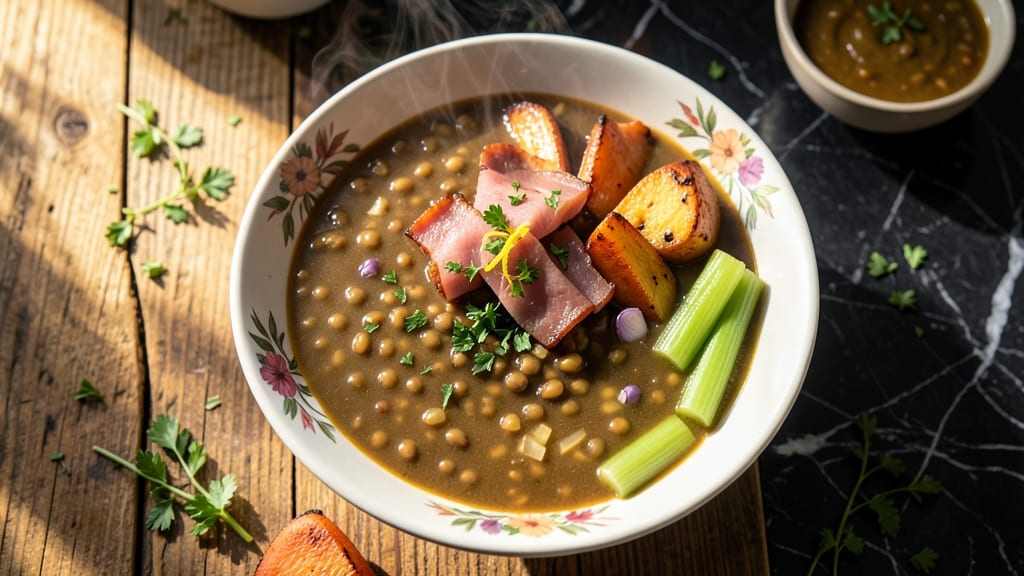
Uncle Bill's split pea soup recipe delivers the kind of soul-warming comfort that turns ordinary weeknights into family gatherings. 🔥 The secret lies in slow-cooked ham and caramelized onions, which build layers of smoky, savory depth that no shortcut can replicate. I first tasted this version at my grandmother's kitchen table, where it was always simmering in a cast-iron pot—now I'm sharing the exact method that creates that perfect balance of tenderness and richness.
This recipe starts with traditional techniques: soaking the split peas overnight for maximum tenderness and browning the ham to develop deep, meaty flavors. The onions caramelize slowly, their sweetness cutting through the earthiness of the peas, while herbs like thyme and bay leaf infuse the broth with aromatic complexity.
The result is a soup that's hearty enough to stand alone but still light enough for summer suppers.
What makes this version special is how the flavors meld over time—each hour of simmering transforms simple ingredients into something extraordinary. The peas soften just enough to break down slightly, releasing their starchy goodness into the broth, while the ham stays tender and flavorful.
The soup thickens naturally as it cooks, creating that perfect spoonful of comfort that's both satisfying and nourishing.
Serve it with crusty bread or a side of cornbread to soak up every last drop of that rich, savory broth. The leftovers actually taste better the next day, making this an ideal make-ahead meal for busy families. Here's how to bring Uncle Bill's tradition to your own kitchen.
Ingredients for uncle bill's split pea soup
These hearty ingredients create Uncle Bill's legendary split pea soup with smoky depth and caramelized sweetness.
| Ingredient | Amount | Notes |
|---|---|---|
| Dried Green Split Peas 🌱 | 2 cups | Rinsed to remove debris |
| Smoked Ham Hock 🥓 | 1 lb | Unsliced, for deep flavor |
| Yellow Onions 🧅 | 2 large | Peeled, sliced into half-moons |
| Carrots 🥕 | 3 medium | Peeled, cut into chunks |
| Celery Stalks 🌿 | 3 whole | Chopped into 1-inch pieces |
| Garlic Cloves 🧄 | 4 cloves | Minced for aromatic depth |
| Fresh Thyme Sprigs 🌿 | 2 whole | Leaves stripped from stems |
| Bay Leaves 🍃 | 2 whole | For subtle herbal notes |
| Black Peppercorns 🌶️ | 1 tsp | Crushed for robust flavor |
| Salt 🧂 | 1 ½ tsp | Diamond Crystal preferred |
| Olive Oil 🫒 | 2 tbsp | For caramelizing onions |
| Water 💧 | 8 cups | Filtered for clarity |
| Fresh Parsley 🌿 | ¼ cup | Chopped for garnish |
The smoked ham hock is non-negotiable for authentic flavor—look for high-quality, uncured options at specialty butchers or well-stocked grocery stores like Whole Foods or Kroger. Freshness matters here: the ham should smell rich and smoky, not overly salty. For the onions, yellow onions work best—their natural sweetness caramelizes beautifully. If you can't find fresh thyme, dried works at half the amount, but fresh leaves infuse the broth with superior aroma. The split peas? Bob's Red Mill brand is my go-to for consistent quality, but any dried green split peas will do.
No smoked ham? Unsmoked ham hock with a 1/2 tsp smoked paprika mimics the flavor, though it won't be identical. Substituting chicken broth for water adds depth, but the ham's richness is irreplaceable. The carrots and celery can be swapped for frozen mixed vegetables in a pinch—just thaw and drain well. For the onions, red onions add color but less sweetness, so adjust to taste. The olive oil is crucial for caramelization—avoid flavored oils that could overpower the soup's delicate balance. If you're short on time, par-cook the onions for 15 minutes before adding to the pot.
This soup tastes even better the next day as flavors meld. Store leftovers in an airtight container in the fridge for up to 5 days, or freeze for 3 months. For serving, warm gently—never microwave, as it can make the peas mushy. The ham hock can be removed after 2 hours of simmering, then shredded for extra richness. Garnish with fresh parsley just before serving to brighten the dish. Leftovers reheat beautifully—simmer on the stove with a splash of water to restore texture.
Why You'll Love This Recipe
- One-Pot Magic: I swear by this recipe because it’s the kind of dish where you dump everything in one pot and walk away. No fancy techniques—just soak those dried peas overnight (or even same-day if you’re in a rush), toss in the ham hock, onions, carrots, and celery, and let it simmer. That’s it. The ham hock melts into the broth like a flavor bomb, and the peas soften just enough to be creamy without mush.
- Smoky, Savory Soul: Honestly, the smoked ham hock is what makes this soup ridiculously good. It infuses the broth with this deep, smoky richness that turns a simple vegetable soup into something hearty and unforgettable. The green split peas add a subtle earthiness, and the sweetness of the onions and carrots balances it all out—like a hug in a bowl.
- Leftovers That Beg for More: This soup only gets better after a day or two in the fridge. The flavors meld together, the broth thickens just right, and suddenly, you’ve got a freezer-friendly meal that’s perfect for busy nights. I’ll be real: I often make a double batch because my family will ask for seconds, and I’ll happily serve it cold the next day with a slice of crusty bread.
- Budget-Friendly Crowd-Pleaser: Between us, this recipe is my go-to for feeding a houseful of people without breaking the bank. Dried peas and a ham hock stretch miles, and the veggies are cheap staples. It’s the kind of dish that makes you feel like you’re serving something special—even if you’re just feeding your roommates or hosting a last-minute gathering. Plus, it’s one of those rare meals where everyone, from picky eaters to soup lovers, ends up happy.
Step-by-step instructions for Uncle Bill's split pea soup
Transform simple ingredients into a rich, smoky masterpiece with this time-tested method.
🍳 Step 1: Caramelize Onions for Deep Flavor
Heat the 2 tablespoons olive oil in a large Dutch oven over medium-low heat. Add the 2 large yellow onions sliced into half-moons and cook for 15-20 minutes, stirring occasionally. You're aiming for deep golden caramelization—not crispy, but rich and sweet-smelling. Resist the urge to rush; patience here builds the soup's foundation.
When the onions are perfectly caramelized, add the 3 medium carrots cut into chunks and 3 whole celery stalks chopped into 1-inch pieces. Cook for another 5 minutes until the vegetables begin to soften slightly but still retain their shape. This step develops the soup's complex flavor profile before the peas even enter the picture.
🔥 Step 2: Build the Aromatic Base
Add the 4 cloves garlic cloves minced, 1 teaspoon crushed black peppercorns, 1.5 teaspoons salt, 2 whole fresh thyme sprigs with leaves stripped, and 2 whole bay leaves to the pot. Stir everything together and cook for 1 minute until fragrant. The garlic should sizzle slightly but not burn—this is where the magic happens.
Here's the thing—don't skip this step. The combination of these aromatics creates a flavor bomb that elevates the entire soup. The thyme and bay leaves infuse subtle herbal notes, while the peppercorns add a quiet, robust heat that balances the sweetness of the caramelized onions.
🥘 Step 3: Add Peas, Ham Hock, and Liquid
Add the 2 cups dried green split peas (rinsed) and the 1 lb smoked ham hock to the pot. Pour in the 8 cups water and bring everything to a boil over high heat. Once boiling, reduce heat to low and add a lid, leaving a small gap for steam to escape. This prevents the peas from boiling over while allowing them to simmer gently.
The ham hock is crucial—it adds deep, smoky flavor that infuses the broth as it cooks. Don't be tempted to use pre-cooked ham; the rendered fat and collagen from the bone create an unmatched richness. Simmer uncovered for 5 minutes to allow any foam to rise and dissipate before covering completely.
⏰ Step 4: Simmer Until Tender Perfection
Cover the pot and simmer for 1.5 to 2 hours until the split peas are fork-tender with a slight resistance. You'll know they're done when they hold their shape but are soft enough to mash slightly between your fingers. The ham hock should be falling apart easily at this point—if not, it needs more time.
I check for doneness by tasting a pea—it should be fully cooked but still hold its shape. If the soup looks too thick, add ½ cup water and continue simmering. The split peas should be creamy but not mushy, and the broth should coat the back of a spoon with a velvety texture.
🔪 Step 5: Finish and Serve
Remove the ham hock and discard the bone, but save the meat for serving. Strain the soup through a fine-mesh sieve to remove the thyme sprigs and bay leaves, pressing gently on the solids to extract maximum flavor. Return the strained soup to the pot and skim off any excess fat that has risen to the surface.
Stir in the reserved ham meat and adjust seasoning if needed. Ladle the soup into bowls and garnish each serving with ¼ cup chopped fresh parsley. The parsley adds a bright, fresh contrast to the rich, smoky flavors. Serve immediately with crusty bread to soak up every last drop of that velvety broth.
Pro Tips For Making Uncle Bill'S Split Pea Soup
- SOAK THE PEAS FIRST: Skip the long simmer wait—soak the dried split peas in cold water for at least 4 hours (or overnight) before cooking. I learned this the hard way: my first batch took 3 hours to soften, and the soup ended up grainy. Soaked peas cut that time in half and make the texture silky.
- BROWN THE HAM HOCK: Don’t just toss the ham hock in the pot raw—sear it in a dry skillet for 3-4 minutes per side until the fat renders and the edges crisp. This adds depth to the flavor, and the rendered fat gives the soup a richer base. (Yes, even if you’re impatient like me.)
- CHOP VEGETABLES EVENLY: Dice the onions, carrots, and celery into ¼-inch pieces—no big chunks, no fine minces. Uneven cuts mean some veggies stay tough while others turn to mush. My grandmother swore by this, and she was right: consistent size = perfect texture.
- SKIM THE FOAM EARLY: After the first 10 minutes of simmering, skim off the gray foam rising to the top—it’s protein scum, not flavor. I used to ignore it, and the soup always tasted slightly off. Five minutes of skimming now saves me from scraping the pot later.
Essential equipment for uncle bill's split pea soup
Dutch Oven Essentials
A 5-7 quart Dutch oven is your best friend for this recipe. I swear by the Lodge 5.5 Quart Pre-Seasoned Cast Iron Dutch Oven—it distributes heat evenly and handles the long simmer beautifully. The deep sides prevent splattering while caramelizing onions, and the heavy base maintains steady temperatures.
If you don’t have cast iron, a high-quality stainless steel Dutch oven like All-Clad works well, though it may require more attention to temperature control. 🔥
Slow Cooker Shortcut
For hands-off cooking, a 6-quart slow cooker saves time and energy. I recommend the Hamilton Beach 6-Quart Programmable Slow Cooker—it has a "high" setting that mimics the Dutch oven's simmer.
Add all ingredients except the parsley, cook on high for 4-5 hours or low for 6-7 hours, then finish by caramelizing onions separately and stirring them in at the end. The slow cooker version tastes just as rich but requires zero monitoring.
Immersion Blender Upgrade
For a silky-smooth texture without straining, an immersion blender is a game-changer. The Ninja BN601 handles hot liquids effortlessly and lets you blend directly in the pot. After simmering, pulse the soup for 10-15 seconds to break down the peas slightly while keeping some texture.
This creates a luxurious, velvety consistency that’s perfect for serving. Just be careful—hot soup splatters when blending!
Fine-Mesh Sieve Must-Have
A stainless steel fine-mesh sieve is non-negotiable for removing herbs and impurities. The OXO Good Grips Collapsible Strainer is my top pick—it’s durable, easy to clean, and fits snugly over most pots.
Press the solids gently to extract every last drop of flavor, then return the strained broth to the pot. Skipping this step leaves behind bitter herb bits that can ruin the soup’s delicate balance. Trust me, your taste buds will notice the difference. 💫
Measuring Cups & Spoons
Precision matters with split pea soup, so invest in high-quality measuring tools. The OXO Good Grips Stainless Steel Measuring Cups and spoons have ergonomic handles and clear markings for accuracy.
For the 2 cups dried peas, use the 1-cup measure twice—don’t eyeball it, as too much or too little can throw off the texture. A microplane for garlic and sharp chef’s knife for onions are also essential for even cooking and flavor development.
Optional: Pressure Cooker Speed
If you’re short on time, a 6-quart electric pressure cooker like the Instant Pot Duo cuts cooking time to 30-40 minutes. Add all ingredients, seal, and cook on high pressure for 20 minutes, then natural release for 10 minutes.
The peas will be perfectly tender, and the ham will render beautifully. Just
Nutrition facts
Frequently asked questions
Can I substitute ham hock with another protein?
Yes, but the flavor will differ. For a vegetarian version, use 2 cups vegetable broth instead of water and add 1 smoked sausage (like kielbasa) for depth. If using chicken, add 1 bone-in chicken thigh for richness, but the broth won't have the same smoky character. The ham hock's collagen and fat are key to the soup's velvety texture and authentic taste.
Why do I need to soak the split peas overnight?
Soaking reduces cooking time by 30-45 minutes and prevents the peas from splitting open too quickly, which can make the soup grainy. Simply rinse 2 cups dried peas in a bowl, cover with water, and let sit overnight. Drain before using—no need to boil them first. This step ensures tender, creamy peas with a perfect bite.
What if my soup turns out too thick or too thin?
For a thicker soup, simmer uncovered for 10-15 minutes to reduce the liquid. If it's too thin, stir in 1-2 tablespoons cornstarch mixed with 1 tablespoon cold water and simmer for 5 minutes until thickened. Never add flour directly—it can create lumps. The ideal consistency should coat the back of a spoon but still be easy to ladle.
Can I make this soup in a slow cooker or Instant Pot?
For a slow cooker, combine all ingredients (except parsley) and cook on low for 6-7 hours or high for 4-5 hours. For an Instant Pot, cook on high pressure for 20 minutes with a natural release. Both methods work well, but the Dutch oven version develops deeper caramelization. The slow cooker requires zero attention, while the Instant Pot cuts time significantly.
How do I know when the split peas are perfectly cooked?
Peas are done when they're fork-tender with a slight resistance—think al dente pasta. Taste-test by scooping a pea: it should hold its shape but mash slightly between your fingers. Overcooking turns them mushy, while undercooking leaves them chalky. The ham hock should also be falling apart easily at this point. If the soup looks too thick, add ½ cup water and continue simmering.