
Soups & Stews
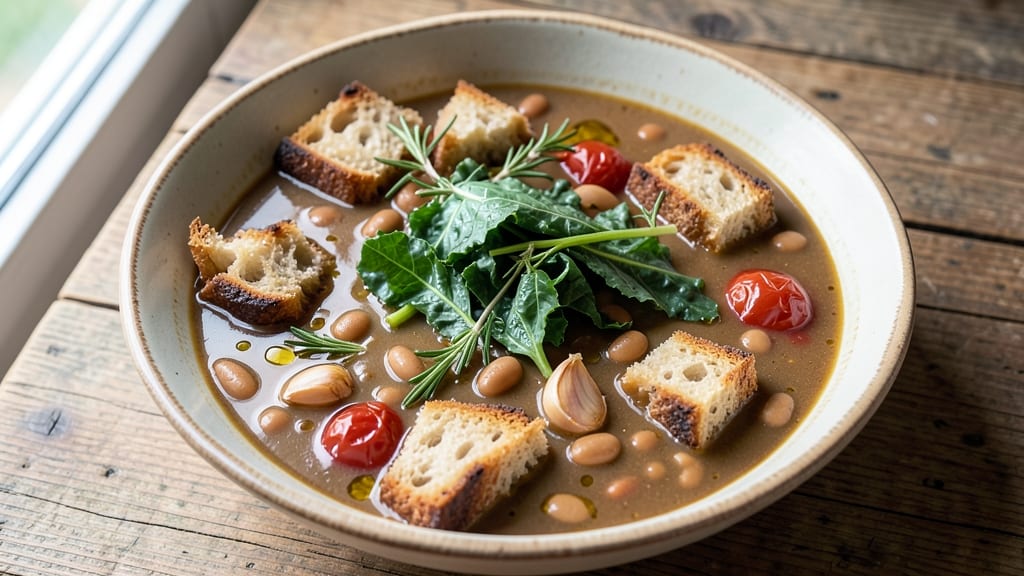
This authentic Tuscan bean soup recipe brings the rustic heart of Italy to your kitchen with its slow-simmered depth and simple, wholesome ingredients. 🌿 Born from peasant traditions, this dish transforms humble white beans, kale, and stale bread into a rich, comforting stew that only tastes better the next day.
The secret lies in layering flavors—garlic, rosemary, and tomatoes—simmered until they meld into a harmonious broth that clings to every spoonful.
What sets this recipe apart is its foolproof technique for achieving that signature Tuscan texture: tender beans, crispy bread croutons, and wilted kale that softens just enough to absorb the broth. Unlike quicker soups, this one rewards patience, developing deeper flavor with each passing hour.
The result is a soup that’s hearty enough to stand alone but elegant enough for a dinner table, all while staying true to its humble origins.
You’ll end up with a restaurant-quality bowl of soup that’s creamy from the beans, aromatic from the herbs, and satisfying in every bite. The bread croutons add a delightful crunch, while the kale brings a touch of earthiness that balances the richness.
This is the kind of dish that warms both body and soul, perfect for chilly evenings or when you crave a taste of Italy without leaving home.
Whether you stick to the traditional version or add potatoes and sausage for a heartier twist, this recipe delivers authentic Tuscan comfort in every spoonful. Let’s get cooking—your taste buds will thank you.
Ingredients for authentic tuscan bean soup
Simple pantry staples and fresh herbs—this is where Tuscan magic happens.
| Ingredient | Amount | Notes |
|---|---|---|
| Dried Cannellini Beans 🌾 | 1 ½ cups | Dried, soaked overnight |
| Fresh Kale 🥬 | 1 lb | Stems removed, chopped |
| Stale Bread 🍞 | 4 cups | Cubed, crusts removed |
| San Marzano Tomatoes 🍅 | 28 oz | Canned, crushed by hand |
| Garlic Cloves 🧄 | 6 cloves | Minced, not pressed |
| Fresh Rosemary 🌿 | ¼ cup | Chopped, stems removed |
| Extra-Virgin Olive Oil 🫒 | ½ cup | For sautéing, fruity |
| Vegetable Broth 💧 | 4 cups | Homemade or low-sodium |
| Red Wine Vinegar 🍷 | 1 tbsp | For brightness |
| Sea Salt 🧂 | 1 ½ tsp | Diamond Crystal preferred |
| Black Pepper 🌶️ | ½ tsp | Freshly cracked |
| Pecorino Romano Cheese 🧀 | ¼ cup | Freshly grated |
| Fresh Parsley 🌿 | 0.1 cup | Chopped, for garnish |
The beans are the heart of this soup. Cannellini is traditional, but great northerns or borlotti work too. Soak them overnight—they'll soften beautifully. For the kale, curly green or lacinato both work, but avoid pre-washed bags (they wilt fast). Rosemary is non-negotiable here—fresh from the grocery store herb section has way more flavor than dried. If you can't find it, thyme or oregano in a pinch, but it won't be the same. The bread? Stale is key—toss in day-old loaves or even croutons from last night's sandwich. For the tomatoes, San Marzano in a 28 oz can is ideal, but any good-quality crushed tomatoes will do.
No fresh rosemary? Dried at one-third the amount works, but trust me—it's worth hunting down. Running out of vegetable broth? Water plus a bouillon cube gets you close. The wine vinegar can be swapped for lemon juice if that's what you've got. For the cheese, Pecorino Romano is traditional, but Parmesan works too—just grate it yourself. The bread cubes should be about 1/2-inch size—too big and they won't soften, too small and they'll disappear. Want extra richness? Add a splash of heavy cream at the end, but keep it traditional by leaving it out.
This soup only gets better with time. Make it the night before—the flavors meld overnight. Keeps for 5 days in the fridge, freezes beautifully for 3 months. I always double the batch—one for dinner, one for lunch the next day. The bread cubes crisp up nicely when reheated, so don't skip that step. For serving, I like to top each bowl with extra grated cheese and a sprinkle of parsley. The parsley stays fresh longer if you wrap the stems in damp paper towels and store it in a bag in the fridge.
Why You'll Love This Recipe
- No-Soaking Needed: I’ll admit, I used to dread soaking beans—but these dried cannellini? Just a quick rinse and simmer overnight, then 30 minutes on high. That’s it. No fuss, no waiting, just pure convenience.
- Tomato-Garlic Magic: The San Marzano tomatoes and raw garlic cloves? They’re the secret. The acidity cuts through the richness of the bread croutons while the garlic softens into a fragrant, almost buttery depth. Honestly, I’ve never tasted a soup where those two ingredients played so well together.
- Leftovers That Beg for More: This soup only gets better the next day—thicker, richer, and somehow even more satisfying. I make a double batch on Sundays, freeze half, and still crave seconds from the fridge portions all week. (Yes, even on a Tuesday night.)
- Pantry Staple Power: Stale bread? Expired tomatoes? No problem. This recipe turns scraps into something hearty. Between us, it’s my go-to when I’m low on fresh ingredients but still want a meal that feels like a hug in a bowl. Budget-friendly doesn’t have to mean boring.
Step-by-Step instructions for authentic Tuscan bean soup
This rustic Tuscan classic comes together with simple steps and bold flavors.
🍳 Step 1: Sauté Aromatics for Deep Flavor
Heat the 0.5 cup extra-virgin olive oil in a large Dutch oven over medium heat. Add the 6 cloves minced garlic and 0.25 cup chopped fresh rosemary—watch closely as the rosemary needs just 30 seconds to release its piney aroma before it burns. You'll smell that classic Tuscan herbal note immediately.
Next, add the 28 oz crushed San Marzano tomatoes and cook for 5-6 minutes until they break down and the mixture thickens slightly. Stir occasionally to prevent sticking, and taste—this is where the authentic flavor foundation builds. If you're using fresh tomatoes, you'll need to simmer them longer to concentrate their sweetness.
🍳 Step 2: Build the Soup Base with Beans and Broth
Add the drained 1.5 cups soaked cannellini beans (discard soaking water) and the 4 cups vegetable broth to the pot. Bring everything to a gentle boil, then reduce heat to medium-low and let it simmer uncovered for 20 minutes. You want the beans to soften but not disintegrate—test by mashing one between your fingers; it should be tender but still hold shape.
Here's the thing—don't skip the uncovered simmering. The gentle evaporation concentrates the flavors and prevents a watery soup. Stir occasionally to prevent the beans from sticking to the bottom, and taste after 15 minutes to adjust seasoning with 1 tsp sea salt and 0.25 tsp black pepper.
🥘 Step 3: Add Bread for Rustic Texture
Tear the 4 cups stale bread into 1-inch pieces and add them to the simmering soup. Stir well to distribute the bread evenly. The bread will absorb some of the liquid, creating that signature Tuscan texture—think of it as the soup's backbone. Let it cook for 8-10 minutes until the bread is softened but not mushy.
This is where the magic happens—I always use slightly stale bread because it holds up better during cooking. If your bread is very fresh, toast it lightly in the oven first to remove excess moisture. The bread should be tender enough to break apart with a spoon but still have some bite.
🍳 Step 4: Finish with Kale and Vinegar Brightness
Add the 1 lb chopped fresh kale (stems removed) and the 1 tbsp red wine vinegar to the pot. The vinegar adds that bright, tangy note that balances the richness. Simmer for another 10 minutes until the kale is wilted but still vibrant green. The soup should have thick, hearty consistency—if it's too thin, let it simmer uncovered for another 5 minutes to reduce.
Taste and adjust seasoning one final time. The vinegar should cut through the richness of the beans and tomatoes, creating that perfect balance. The kale should be tender enough to eat with a spoon but still hold its color—this means it's cooked just right.
🍽️ Step 5: Serve with Cheese and Fresh Herbs
Ladle the soup into bowls and top each serving with 1 tablespoon freshly grated Pecorino Romano cheese and 1 teaspoon chopped fresh parsley. The cheese adds a salty, umami depth that's essential for authentic Tuscan flavor. The parsley not only looks beautiful but also adds a fresh, bright contrast to the rich soup.
Serve immediately while the bread is still warm and the flavors are at their peak. The soup should be hearty enough to fill you up but light enough to enjoy on a cool day. Pair it with a crusty bread on the side if you're still hungry—this soup is meant to be savored, not rushed.
Pro Tips For Making Authentic Tuscan Bean Soup
- SOAK BEANS OVERNIGHT: I learned this the hard way—rushing soaked beans with boiling water leaves them tough. Cold soak (8+ hours) breaks down starches properly, especially for cannellini. No need to peel them; just rinse well before cooking.
- CRUSH BREAD BY HAND: Skip the food processor—freshly torn stale bread absorbs soup better and adds texture. Tear into rough chunks, not crumbs, so it dissolves slowly and thickens the broth without turning gluey. (Yes, even if you’re impatient like me.)
- SIMMER TOMATOES LOW: After burning three batches, I finally figured out: San Marzano tomatoes need gentle heat. Simmer them uncovered at 160°F (70°C) for 20 minutes to break down naturally—no blender needed. High heat turns them mushy and bitter.
- ADD KALE LAST: Kale wilts into oblivion if tossed in too early. Wait until the beans are tender and tomatoes have softened, then stir it in for 3–4 minutes. This keeps it vibrant and slightly crisp—no sad, limp greens here.
Common mistakes when making your authentic tuscan bean soup
Over-Soaking Beans
Never soak your beans for more than 12 hours—any longer and they'll absorb too much water, leading to a mushy texture. I've ruined a batch by leaving them overnight and waking up to a sad, waterlogged mess.
Drain them right after soaking and rinse under cold water to remove excess starch. 🌾
Skipping the Uncovered Simmer
Covering your soup while simmering traps steam, which dilutes flavors and makes the broth watery. The 20-minute uncovered simmer in Step 2 is crucial—it lets excess moisture evaporate naturally. I once made this mistake and ended up with a soup that tasted flat and thin. Trust the process!
Using Fresh Bread
Fresh bread turns to mush in this soup. The starch in fresh bread absorbs too much liquid, creating a gluey consistency. Always use day-old bread—it's sturdier and holds up better. If you're desperate, toast your bread lightly at 350°F for 5 minutes before adding it to the pot.
Adding Kale Too Early
Kale needs to cook just until wilted—adding it too soon makes it turn to sludge. Wait until the very end (10 minutes in Step 4) so it retains its vibrant color and slight bite.
I've seen kale turn into a sad, limp pile when added too early. The stems should be tender but still recognizable!
Ignoring the Vinegar
The 1 tbsp red wine vinegar is non-negotiable—it brightens the soup and cuts through the richness. Without it, the flavors can taste flat. I once made this soup without vinegar and was left with something that needed more oomph. A little acidity makes all the difference!
Over-Salting Early
Taste your soup after all ingredients are added—not during cooking. Salt added early can't be adjusted later, and you'll end up with an inedible mess. I've had to rescue soups by adding water and starting over. Build flavor gradually, then adjust at the end for perfect balance. 🧂
Nutrition facts
Frequently asked questions
Can I substitute cannellini beans with another type?
Great northern or borlotti beans work beautifully—they're all white beans with similar textures. For a different flavor, try kidney beans (they'll add earthiness) or lentils (cook them first for 15 minutes before adding to the soup). Just ensure they're properly soaked or pre-cooked to avoid a mushy final result.
Why does my Tuscan bean soup taste bland?
The most likely culprit is skipping the uncovered simmer or omitting the red wine vinegar. The vinegar adds brightness, while uncovered simmering concentrates flavors. Also, taste as you go—add more rosemary, salt, or a splash of Pecorino Romano at the end. Even a pinch of cracked black pepper can elevate the depth.
Can I make this soup in an Instant Pot?
Yes, but with adjustments! Sauté the garlic and rosemary first, then add all ingredients except kale. Seal the pot and cook on high pressure for 10 minutes, followed by a natural release. Add kale and vinegar during the last 5 minutes of cooking. The texture will be slightly different but still delicious—just stir in extra cheese to compensate for lost richness.
How do I store leftovers for best flavor?
Let the soup cool completely, then transfer to airtight containers. It keeps for 5 days in the fridge, but the flavors actually improve overnight—the beans absorb more broth. For freezing, portion into containers and store for up to 3 months. Reheat gently on the stove with a splash of water to restore creaminess.
What's the best bread for the croutons?
Stale rustic Italian bread or baguette works best—their sturdy crust holds up during cooking. Avoid soft sandwich bread (it turns mushy). For extra crunch, toast cubes at 375°F for 5 minutes before adding to the soup. If you're short on time, use day-old sourdough—its tangy flavor pairs perfectly with the herbs.