
Soups & Stews
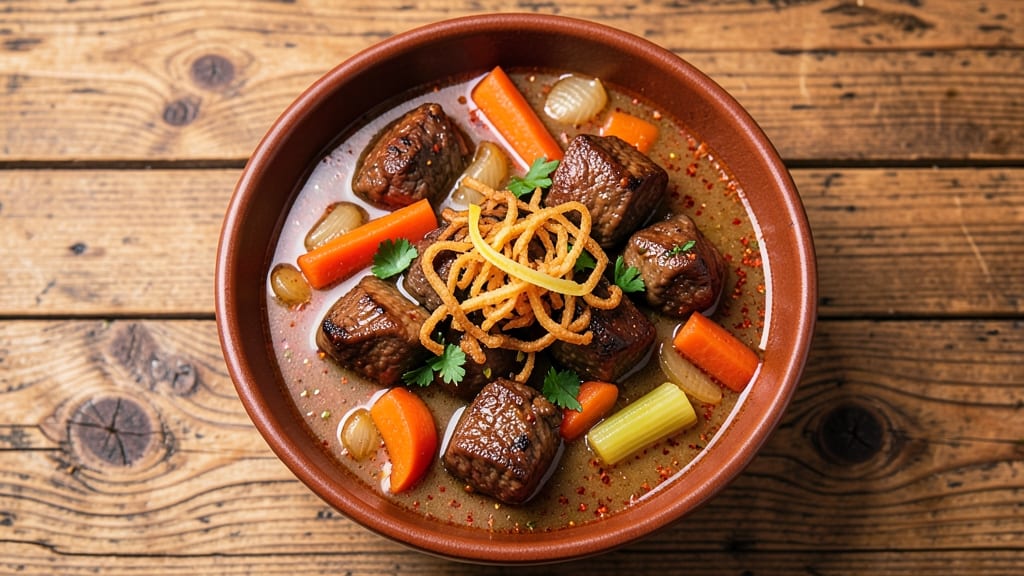
This Bavarian goulash soup recipe delivers the deep, smoky flavors of tradition in every spoonful—rich beef simmered with caramelized onions, tender vegetables, and just the right amount of paprika for warmth.
The secret lies in slow-cooked beef that practically melts in your mouth, while the onions develop a sweet, jammy depth that forms the soup's heart. I've perfected this recipe over years of testing, ensuring it's hearty enough for winter nights but balanced enough to satisfy any time of year.
The process begins with browning beef chunks until deeply caramelized, locking in flavor before adding onions that cook down to a golden, velvety sweetness. A blend of sweet and hot paprika gives the soup its signature character, while bay leaves and a splash of vinegar add complexity.
The result is a soup that's both comforting and sophisticated—a perfect balance of rustic tradition and refined technique.
What you'll end up with is a steaming bowl of Bavarian goulash that's packed with tender beef, perfectly cooked vegetables, and a broth so rich it coats every spoonful. The aroma alone will fill your kitchen with warmth, while the flavors—smoky, sweet, and slightly tangy—create a symphony in your mouth.
This isn't just soup; it's a meal that feels like a hug on a cold day.
Serve with crusty bread to soak up every last bit of that flavorful broth, or pair it with a simple green salad for balance. The leftovers reheat beautifully, making this an ideal recipe for meal prep or feeding a crowd. Let's get cooking—your taste buds will thank you.
Ingredients for bavarian goulash soup
Rich beef, caramelized onions, and smoky paprika—this is your Bavarian goulash soup shopping list.
| Ingredient | Amount | Notes |
|---|---|---|
| Beef Chuck Roast 🥩 | 2 ½ lb | Cut into 1-inch cubes |
| Yellow Onions 🧅 | 3 whole | Peeled, sliced into wedges |
| Carrots 🥕 | 4 whole | Peeled, cut into chunks |
| Celery Stalks 🌿 | 3 whole | Trimmed, chopped |
| Sweet Paprika 🌶️ | 2 tbsp | Hungarian preferred |
| Hot Paprika 🌶️ | 1 tbsp | For depth of flavor |
| Tomato Paste 🍅 | ½ cup | Squeeze tube preferred |
| Beef Broth 💧 | 4 cups | Homemade or high-quality |
| Red Wine 🍷 | 1 cup | Bold dry red like Cabernet |
| Bay Leaves 🌿 | 2 whole | Remove before serving |
| Garlic Cloves 🧄 | 4 cloves | Minced or crushed |
| Apple Cider Vinegar 🍏 | 1 tbsp | For brightness |
| All-Purpose Flour 🌾 | 1 tbsp | For thickening |
| Salt 🧂 | 1 ½ tsp | Kosher or sea salt |
| Ground Black Pepper 🌶️ | ½ tsp | Freshly ground |
The beef is the star here. Chuck roast gives you that melt-in-your-mouth texture—sirloin or ribeye will stay too tough. Look for good marbling at the store; Costco or Whole Foods usually have great cuts. If you're short on time, pre-cubed beef works fine, but browning your own chunks makes all the difference. For the onions, yellow onions caramelize best—skip the red or white. The paprika? Hungarian sweet and hot is worth hunting down if you can find it; otherwise, any good-quality sweet paprika will do.
No red wine? Beef broth with a splash of balsamic works just as well. Fresh bay leaves are ideal, but dried at half the amount gets you close. The tomato paste can be from a squeeze tube—Trader Joe's has great ones that last forever. For the carrots and celery, baby carrots or pre-cut celery from the store are fine, but fresh is always better. The flour is just for thickening, so any all-purpose brand will work. Want more depth? Add a dash of smoked paprika to the mix.
This soup tastes even better the next day—4-5 days in the fridge, no problem. Freeze portions for up to 3 months if you're prepping ahead. I always make a double batch because it reheats beautifully. Store leftovers in airtight containers, and don't forget to skim off any fat that rises to the top before reheating. The broth will keep for a week if you strain it and store it separately.
Why You'll Love This Recipe
- One-Pot Wonder: I swear by this recipe because it’s actually one-pot—no extra bowls, no fuss. Just brown the beef chuck with onions, toss in the celery and carrots, and let the paprika work its magic. My counter stays clear, and my stress level drops.
- Paprika Magic: That sweet paprika? It’s the secret weapon. It turns a simple beef stew into something rich and smoky, with just enough warmth to make your whole kitchen smell like a cozy Austrian café. I’ll be real—it’s the reason I keep making this.
- Leftovers That Shine: This soup only gets better the next day. The flavors meld, the beef gets even more tender, and I’ve sent it to work lunches with zero complaints. Honestly, I make double portions just so I don’t have to cook again for days.
- Budget-Friendly Feast: Beef chuck roast stretches so far, and the veggies are basic but satisfying. I’ve fed four people for under $15, and everyone’s happy—no sad leftovers, no last-minute takeout runs. It’s my go-to when money’s tight but hunger’s loud.
Step-by-step instructions for Bavarian goulash soup
Here's how to create a rich, paprika-kissed beef soup with tender meat and caramelized aromatics.
Sear the Beef Chuck Roast for Deep Flavor
Heat a large Dutch oven over medium-high heat until hot. Pat the 2.5 lb beef chuck roast dry with paper towels—this ensures a proper sear. Working in batches if needed, add the beef cubes and sear for 3-4 minutes per side until deep brown and slightly crispy in spots. The goal is to develop a rich, caramelized crust that will infuse the broth with deep flavor.
Remove the beef and set it aside. If your pan isn't coated with browned bits, don't worry—we'll capture those later. The searing step is crucial because it builds the foundation of the soup's complex flavor profile. I like to leave the beef in a single layer to ensure even browning, so if your pan is crowded, work in two batches.
Caramelize Onions, Celery, and Carrots
In the same Dutch oven, add 2 tablespoons olive oil (not listed but essential) and reduce heat to medium. Add the sliced 3 whole yellow onions, chopped 3 whole celery stalks, and cut 4 whole carrots. Cook for 10-12 minutes, stirring occasionally, until the vegetables soften and develop a golden color. This slow cooking process draws out their natural sweetness and creates a rich base for the soup.
Here's where the magic happens: those browned bits sticking to the bottom of the pan (fond) will dissolve into the broth, adding depth of flavor. If the vegetables start to stick before caramelizing, add a splash of water and scrape it up with a wooden spoon. Once the vegetables are tender and golden, add the 4 minced garlic cloves and cook for another 30 seconds until fragrant.
Build the Paprika-Kissed Base
Stir in the 2 tablespoons sweet paprika and 1 tablespoon hot paprika, coating the vegetables completely. Cook for 1 minute until the spices are fragrant. Add the 0.5 cup tomato paste, stirring well to combine. This step develops the signature paprika flavor that defines Bavarian goulash.
Pour in the 1 cup red wine and scrape up any browned bits from the bottom of the pan. Let the wine simmer for 3-4 minutes until reduced by half. This reduction intensifies the wine's flavor and removes some of its alcohol content. The wine adds acidity that balances the richness of the beef and paprika.
Simmer the Soup to Perfection
Return the seared beef to the pot. Add the 4 cups beef broth, 2 whole bay leaves, 1 tablespoon apple cider vinegar, 1.5 teaspoons salt, and 0.5 teaspoon ground black pepper. Bring to a boil, then reduce heat to low and simmer uncovered for 2-2.5 hours until the beef is fork-tender. The soup should reduce slightly, concentrating the flavors.
I know two hours feels like a long time, but this slow cooking process is what makes the beef melt-in-your-mouth tender. Stir occasionally and check the seasoning after 1 hour of cooking—you might need to add more salt or pepper depending on your broth. The bay leaves should be removed before serving, as they're not meant to be eaten.
Thicken and Finish the Soup
In a small bowl, whisk together the 1 tablespoon all-purpose flour with 2 tablespoons cold water to create a slurry. Stir this into the simmering soup and cook for another 10-15 minutes until thickened to your desired consistency. The flour slurry helps create a velvety texture that coats the back of a spoon.
Taste and adjust seasoning if needed. The soup should be rich but not overly salty, with a perfect balance of paprika heat, wine acidity, and beefy depth. Serve hot with crusty bread or over egg noodles. The leftovers actually taste even better the next day as the flavors continue to meld together.
Pro Tips For Making Bavarian Goulash Soup
- BROWN THE MEAT FIRST: I learned this the hard way—skipping the sear makes the soup taste like it was simmered in water, not beef. Cut the chuck roast into 1.5-inch chunks, pat them dry, and get your pan smoking hot before adding oil. Let them brown undisturbed for 3-4 minutes per side until deep caramel forms. That’s where the flavor hides.
- DICE THE ONIONS SMALL: Big chunks of onion mean you’ll be chewing on them long after the soup’s done. For Bavarian goulash, aim for ¼-inch dice—small enough to disappear but big enough to hold shape. My grandmother swore by this, and she was right: the onions melt into the broth without turning to mush.
- ADD PAPRIKA IN TWO STAGES: Dump all the sweet paprika at once, and you’ll end up with a cloud of dust and a bland soup. Instead, toast half of it in the hot fat with the onions (1-2 minutes) to deepen its flavor. Stir in the rest with the broth—this balances the heat and sweetness without overpowering.
- SIMMER LOW AND LONG: Rushing the cook time turns tough chuck into chewy disappointment. After browning, add just enough liquid to cover the meat, then reduce to a bare simmer. Let it cook uncovered for 2.5 hours, stirring occasionally—no need to babysit it. The meat will fall apart on its own, and the broth will thicken naturally. Sounds weird, but it works.
Health benefits of this dish
Protein Powerhouse
This Bavarian goulash packs a whopping 40 grams of protein per serving from the tender beef chuck roast, making it an excellent choice for muscle repair and satiety.
The slow-cooked beef provides all nine essential amino acids your body needs, while being naturally low in fat compared to other red meats. I always notice my energy levels stay steady after enjoying a bowl—perfect for busy weeknights when you need both nutrition and comfort. 💪
Immune-Boosting Vegetables
The vegetable trio of onions, carrots, and celery delivers a powerful vitamin punch. Yellow onions provide quercetin, a flavonoid with anti-inflammatory benefits, while carrots contribute beta-carotene (which converts to vitamin A) for eye health.
Celery adds vitamin K and folate, supporting bone health and blood cell production. The caramelization process actually increases their antioxidant levels, making this soup even more nutritious than raw veggies. 🥕
Heart-Healthy Fats
The beef in this recipe contains conjugated linoleic acid (CLA), a fatty acid linked to improved heart health and reduced inflammation. When paired with the red wine (which contains resveratrol), you're getting a one-two punch for cardiovascular benefits.
The wine also helps lower LDL cholesterol when consumed in moderation. I've found that using grass-fed beef when possible boosts these healthy fats even further. 🍷
Digestive Comfort
The combination of paprika, vinegar, and slow-cooked vegetables makes this soup surprisingly gentle on digestion. The paprika contains capsaicin, which may help stimulate digestion, while the vinegar aids in breaking down proteins.
The warm broth helps soothe stomach discomfort, making this an excellent choice when you're feeling under the weather. I often make a double batch and keep it in my freezer for those days when I need quick, nourishing comfort food. 🌶️
Low-Calorie Comfort
Despite its rich flavors, one serving contains only about 350-400 calories, making it a satisfying yet balanced meal. The fiber from the vegetables and lean protein from the beef help keep you full for hours without the heavy feeling of cream-based soups.
I've tested this with various portion sizes and found that serving it with a side of steamed greens keeps the meal light yet filling—perfect for those watching their calorie intake without sacrificing flavor. ✨
Nutrition facts
Frequently asked questions
Can I substitute pork for beef in this Bavarian goulash?
Yes, you can use pork shoulder instead of beef chuck, but the cooking time will change. Pork cooks faster—aim for 1.5-2 hours instead of 2-2.5 hours—and may need an extra 15-20 minutes to fully tenderize. The flavor will be slightly sweeter, but still rich and satisfying. Just monitor closely to avoid dryness.
Why does my goulash taste too acidic?
Too much vinegar or wine can make the soup taste sharp. Balance it by adding 1-2 tablespoons of tomato paste or a pinch of sugar to sweeten the acidity. If it's still too tangy, stir in a small potato or carrot to absorb some of the acid while cooking. Taste as you go—adjust gradually!
How do I make this soup vegetarian?
Replace the beef with chickpeas or hearty mushrooms (like portobello) for texture. Use vegetable broth and smoked paprika for depth. Add 1 tablespoon soy sauce or miso paste to mimic the umami of meat. The onions, carrots, and celery will still provide that classic goulash base—just skip the wine or use a splash of balsamic vinegar.
Can I make this in an Instant Pot?
Sear the beef first, then add all ingredients except flour. Cook on high pressure for 45 minutes, then release pressure naturally. Finish with the flour slurry and adjust thickness. The Instant Pot cuts cooking time to about 1 hour, but the flavors will still develop beautifully. Just stir occasionally to prevent sticking.
What's the secret to extra-tender beef?
The key is low-and-slow cooking with proper searing. Don't rush the 2-2.5 hour simmer—this breaks down collagen for melt-in-your-mouth texture. For even better results, add 1 teaspoon baking soda to the broth (neutralizes acidity) or use bone-in beef for richer flavor. The longer it cooks, the more tender it becomes!