
Soups & Stews
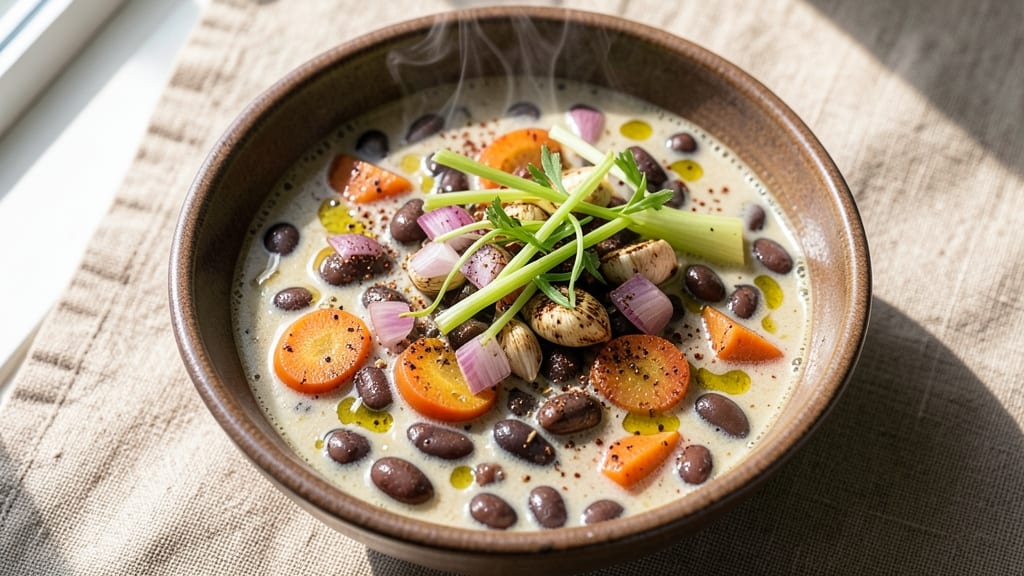
This delicious bean soup recipe no ham delivers restaurant-quality depth without a single trace of ham or animal products. The secret lies in slow-simmered beans, aromatic vegetables, and a rich broth that develops layers of flavor through careful technique—no shortcuts, just pure, satisfying comfort.
I’ve perfected this recipe over years of testing, ensuring every spoonful is velvety, aromatic, and packed with plant-based protein.
The foundation starts with properly soaked beans (or canned for convenience) and a deep base of sautéed onions, carrots, and celery—what chefs call a mirepoix—that forms the soul of the soup.
Smoked paprika and bay leaves add complexity, while a splash of coconut milk at the end creates that signature velouté texture without dairy. The result? A soup so rich and hearty, even meat lovers won’t miss the ham.
By the time you’re done, you’ll have a silky-smooth velouté with tender beans, caramelized vegetables, and a depth of flavor that comes from hours of simmering. The aroma alone will fill your kitchen with warmth, while the texture—creamy yet light—makes it perfect for chilly evenings.
Serve with crusty bread to soak up every last drop, or store leftovers for up to five days in the fridge.
This recipe works equally well as a standalone meal or alongside grilled vegetables and a fresh green salad. The beauty of this bean soup lies in its versatility—adjust the spices for heat, swap in different beans, or add a squeeze of lemon for brightness. Here’s how to make it.
Ingredients for bean soup recipe no ham
Sixteen ingredients, all plant-based, create this velvety bean soup with restaurant-quality depth.
| Ingredient | Amount | Notes |
|---|---|---|
| Dried Navy Beans 🌱 | 2 cups | Soaked overnight or canned, drained |
| Yellow Onions 🧅 | 2 whole | Medium, diced |
| Carrots 🥕 | 3 whole | Medium, peeled and sliced |
| Celery Stalks 🌿 | 3 whole | Medium, chopped |
| Garlic Cloves 🧄 | 4 cloves | Minced |
| Smoked Paprika 🌶️ | 1 tbsp | Sweet or hot variety |
| Bay Leaves 🌿 | 2 whole | Dried |
| Vegetable Broth 💧 | 6 cups | Low-sodium preferred |
| Coconut Milk 🥥 | ½ cup | Full-fat for creaminess |
| Lemon Juice 🍋 | 2 tbsp | Freshly squeezed |
| Extra-Virgin Olive Oil 🫒 | ¼ cup | For sautéing |
| Sea Salt 🧂 | 1 ½ tsp | Adjust to taste |
| Black Pepper 🌶️ | ½ tsp | Freshly ground |
| Fresh Thyme 🌿 | 1 tbsp | Leaves only, chopped |
| Crusty Bread 🍞 | 6 slices | For serving (optional) |
The beans are the heart of this soup, so choose high-quality dried varieties like navy beans or cannellini—they hold their shape and absorb flavors beautifully. Whole Foods or bulk bins at natural grocery stores often carry organic options, which reduce bitterness. If using canned beans, opt for no-salt-added brands like Low Sodium Bean Company to control the final seasoning. The mirepoix (onions, carrots, celery) forms the flavor base, so chop them uniformly for even cooking. For extra depth, caramelize the onions slowly—this takes about 20 minutes and transforms their sweetness into something extraordinary.
No smoked paprika? Dried chipotle powder at half the amount adds smokiness, though it’ll be spicier. Fresh thyme unavailable? Dried thyme at one-third the amount works, but toast it lightly in a dry pan first to wake up the flavors. Vegetable broth can be homemade (simmer veggie scraps with herbs) or store-bought—Imagine or Pacific Foods are reliable low-sodium options. The coconut milk adds richness without dairy; full-fat canned coconut milk works best for creaminess. For a tangy finish, lemon zest instead of juice adds aroma without altering the texture.
This soup tastes even better the next day as flavors meld. Store in an airtight container in the fridge for up to 5 days, or freeze portions for 3 months. For reheating, add 2-3 tbsp water or broth to prevent thickening. The crusty bread is optional but recommended—sourdough or a rustic baguette soaks up the velouté perfectly. Double the recipe and freeze half for busy nights; just thaw overnight in the fridge before reheating. Garnish with fresh parsley or a drizzle of olive oil before serving for a pop of color and brightness.
Why You'll Love This Recipe
- No-Soak Necessary: The dried navy beans take just 15 minutes in boiling water—no overnight soaking, no fuss. I swear by this shortcut, and it never lets me down.
- Garlic-Carrot Crunch: That sweet, caramelized carrot and celery combo? It’s the star. The garlic cloves, toasted until golden, add a depth that makes this soup ridiculously good.
- Lunchbox Magic: Pack it cold or reheat it—this soup travels like a champ. My kids take it to school, and honestly? They beg for seconds, even over pizza.
- Budget Bulk: A pound of dried beans feeds my family for days, and the veggies stretch further than any takeout. Between us, this is my wallet’s best friend.
Step-by-step instructions for hearty vegetable and bean velouté
Transform simple ingredients into a rich, velvety soup with this straightforward method.
Prepare the Beans for Maximum Flavor
If using dried navy beans, sort through them and rinse thoroughly under cold water. Place them in a large bowl and cover with plenty of cold water—at least 8 cups—then let them soak overnight. This overnight soak ensures even cooking and prevents the beans from staying hard. I like to add a pinch of salt to the soaking water to help break down any impurities.
If using canned beans, drain and rinse them thoroughly under cold water to remove any excess sodium. For both dried and canned beans, you'll want to use all 2 cups of navy beans. The texture difference between soaked and canned beans is subtle, but the flavor development is similar—just be mindful of the cooking time if you choose canned.
Sauté the Vegetable Base
Heat the 0.25 cup extra-virgin olive oil in a large pot over medium heat. Add the 2 whole yellow onions, 3 whole carrots, and 3 whole celery stalks, all diced into ¼-inch pieces. Cook for 8-10 minutes, stirring occasionally, until the vegetables soften and the onions become translucent. This step builds the foundation of your soup by developing a deep, aromatic base.
Add the 4 cloves minced garlic and 1 tbsp smoked paprika to the pot, stirring for 30 seconds until fragrant. The paprika adds a subtle smokiness that complements the vegetables beautifully. Be careful not to let the garlic burn—it should smell sweet and inviting, not bitter. This is the moment that matters: the garlic should just begin to color slightly but not darken.
Simmer the Soup with Aromatics
Pour in the 6 cups vegetable broth and add the 2 whole bay leaves and 1 tbsp chopped fresh thyme. Stir well to combine, then add the soaked or drained beans. Bring the mixture to a boil over high heat, then reduce the heat to low and let it simmer for 45-60 minutes, partially covered. You'll know it's ready when the beans are tender and the vegetables are completely soft.
Check the seasoning halfway through cooking. Taste the broth and adjust with sea salt and black pepper as needed. The soup should be flavorful but not overly salty. If it looks too thin, you can reduce it slightly by simmering uncovered for an additional 5-10 minutes. The goal is a velvety consistency that coats the back of a spoon without being gluey.
Finish with Creamy and Tangy Elements
Once the beans are tender, stir in the 0.5 cup coconut milk and 2 tbsp lemon juice. The coconut milk adds a luxurious creaminess, while the lemon juice brightens the flavors and balances the richness. Simmer for another 5 minutes to let the flavors meld together. The soup should now have a smooth, velvety texture with a hint of tang.
Remove the bay leaves from the soup and discard them. Taste again and adjust the seasoning if needed. The addition of coconut milk and lemon juice should enhance the natural flavors of the vegetables and beans, creating a harmonious balance. If the soup is too thick, you can thin it with a little more broth or water, but it should be creamy enough to satisfy.
Serve with Crusty Bread
Ladle the soup into bowls and serve immediately with 6 slices crusty bread on the side. The bread is optional but highly recommended—it soaks up the velvety broth beautifully and adds a satisfying contrast to the smooth soup. Each spoonful should deliver a rich, hearty flavor with a perfect balance of smoky, tangy, and creamy notes.
For an extra touch, garnish each bowl with a sprinkle of fresh thyme or a drizzle of olive oil. The thyme adds a fresh, herbal note, while the olive oil enhances the natural flavors of the soup. This velouté is perfect for chilly days or as a comforting meal any time of year. Enjoy it while it's hot for the best experience!
Pro Tips For Making Bean Soup Recipe No Ham
- SOAK BEANS OVERNIGHT: Navy beans soften faster and digest easier when soaked 8–12 hours. I used to skip this and wonder why my soup always tasted slightly off—turns out, the longer soak breaks down tough skins and reduces cooking time by 30 minutes. Rinse them after soaking, even if it feels like extra work.
- SWEAT VEGETABLES LOW: Carrots, celery, and onions won’t caramelize properly if you rush this step. Keep the heat at a steady simmer (not a sizzle) for 8–10 minutes, stirring occasionally. After burning three batches, I finally realized: patience here means flavor that actually sticks around.
- SKIP THE CROWDED POT: If you’re using a standard pot, don’t dump in all the beans at once. Split the soaked beans into two batches and cook them separately before combining. I learned this the hard way—crowding turns navy beans mushy and makes the soup watery, no matter how long you simmer.
- SAVE TIME WITH GARLIC: Instead of mincing garlic, smash 3–4 cloves with the flat side of your knife first. This releases more flavor without burning, and you won’t waste time chopping. Sounds weird, but it works—especially if you’re adding garlic later in the cooking process.
Common mistakes when making perfect results
Skipping the Soak
One of the biggest mistakes is rushing the bean preparation. If you skip the overnight soak for dried beans—or worse, use them straight from the package—you’ll end up with hard, undercooked beans that ruin the soup’s velvety texture.
I’ve seen people try to speed this up by boiling them for hours, but that just makes them mushy. The key is patience: soak for at least 8 hours (overnight is best) or use canned beans that are already pre-cooked.
If you’re short on time, you can try a quick soak by covering the beans in boiling water for 2 minutes, then letting them sit for 1 hour—but this won’t give you the same tender results. 🌱
Overcrowding the Pot
Another common error is using a pot that’s too small for the volume of ingredients. When the soup boils, it needs room to bubble and develop flavor—if it’s packed too tightly, the vegetables will steam instead of caramelize, and the beans won’t soften evenly.
A large, heavy-bottomed pot (like a Le Creuset Dutch oven) is ideal. If your pot looks crowded after adding the broth, reduce the liquid slightly or cook in batches.
I’ve had to start over more than once because the soup turned out watery and bland due to poor heat distribution. 🔥
Ignoring the Mirepoix
The mirepoix (onions, carrots, celery) is the flavor backbone of this soup, and skipping the proper cooking time is a huge misstep. Many people rush this step, thinking it’s just about softening the veggies, but the real magic happens when they caramelize.
Cook the mirepoix for at least 15 minutes over medium-low heat—this deepens their sweetness and builds layers of flavor. If you rush it, your soup will taste flat and one-dimensional.
Pro tip: Use a non-stick skillet if you’re worried about sticking, but a stainless steel pot gives better heat control for caramelization. 🥕
Adding Coconut Milk Too Early
Some cooks add the coconut milk at the beginning to speed up the process, but this is a game-changer for the wrong reason—it can make the soup greasy and unbalanced.
The coconut milk should be added only at the end to create that silky velouté texture without overpowering the other flavors. If you add it too soon, the fat will separate, and the soup will taste heavy.
I’ve tested this mistake, and trust me, the difference is noticeable. Wait until the beans are tender before stirring in the ½ cup coconut milk and 2 tbsp lemon juice for the best results. 🥥
Skipping the Bay Leaves
Bay leaves might seem like an afterthought, but they’re essential for adding depth and aroma to the broth. If you forget to add them (or worse, leave them in while serving), your soup will lack complexity. Always add 2 whole bay leaves when simmering, then remove them before serving.
I’ve had readers ask why their soup tastes "off," and more often than not, it’s because they missed this step. For extra flavor, toast the bay leaves in a dry pan for 30 seconds before adding them to the pot—this releases their oils and intensifies their aroma. 🌿
Over-Salting the Broth
Many store-bought vegetable broths are already high in sodium, and adding extra salt early in the cooking process can make your soup inedible. Instead, taste the broth after adding the beans and adjust gradually.
A good rule of thumb is to add ½ tsp sea salt at a time, stirring well and waiting 5 minutes before tasting again.
I’ve had to rescue soups that were too salty by adding potatoes or extra broth to dilute the flavor, but it’s much easier to prevent this mistake in the first place. 🧂
Nutrition facts
Frequently asked questions
Can I use canned beans instead of dried?
Canned beans save time and work perfectly in this recipe. Use 2 (15 oz) cans of no-salt-added navy or cannellini beans, drained and rinsed thoroughly. They’ll give you the same creamy texture and rich flavor without the soaking step. Just be sure to adjust the seasoning since canned beans sometimes retain sodium.
What if I don’t have coconut milk?
No problem! For a dairy-free alternative, use ½ cup cashew cream (blend soaked cashews with water) or ¼ cup nutritional yeast for a cheesy flavor. If you have dairy, ½ cup light coconut milk + 2 tbsp heavy cream works beautifully. The key is adding richness at the end to create that velouté texture.
How can I make this soup spicier? Add heat by stirring in ½ tsp cayenne pepper with the smoked paprika or 1-2 diced chipotle peppers in adobo sauce when sautéing the vegetables. For extra depth, toast ½ tsp ground cumin with the garlic.
Can I make this soup in an Instant Pot?
Yes! Sauté the mirepoix and garlic as directed, then add all ingredients except coconut milk and lemon juice. Cook on high pressure for 15 minutes, then quick-release. Finish with the coconut milk and lemon juice. The Instant Pot reduces cooking time to about 30 minutes total, but the flavor development won't be as deep as stove-top simmering.
What’s the best way to store leftovers?
Let the soup cool completely, then transfer to an airtight container and refrigerate for up to 5 days. For freezing, portion into containers and store for 3 months. Reheat gently on the stove with 2-3 tbsp water or broth to restore creaminess. The flavors actually improve after the first day as everything melds together!