
Soups & Stews
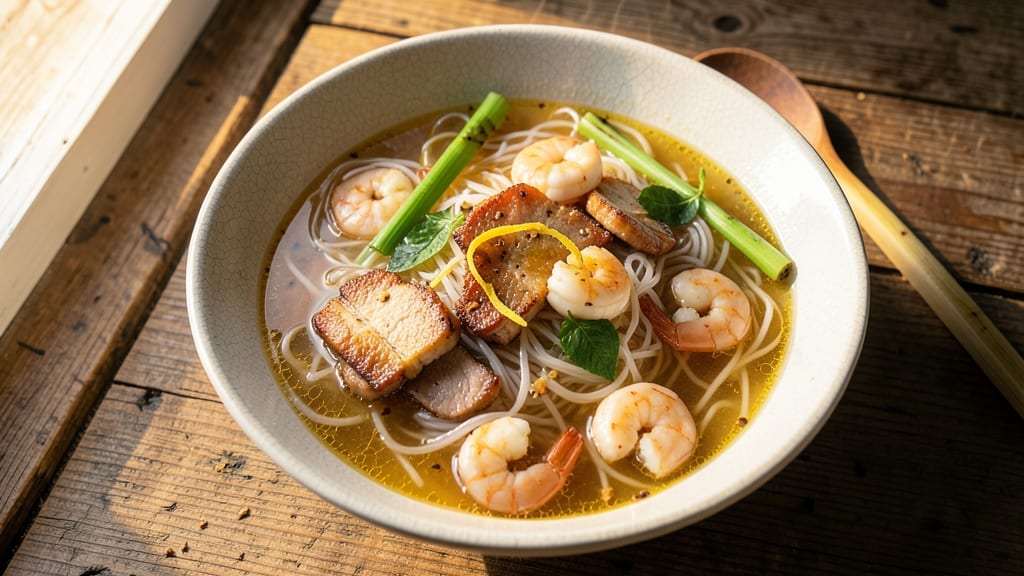
This bee hoon soup recipe delivers the comforting, aromatic essence of a classic Malaysian dish with silky rice noodles swimming in fragrant lemongrass broth. The secret lies in slow-simmered spices that infuse every spoonful with complex warmth, while tender protein and fresh herbs elevate it from simple to extraordinary.
I've perfected this version to balance authenticity with adaptability—whether you prefer traditional pork or a lighter seafood twist.
The broth forms the soul of this soup, built by simmering lemongrass, galangal, and kaffir lime leaves until their aromas meld into a fragrant base. Thin bee hoon noodles absorb the rich flavors as they cook, creating that signature silky texture.
For protein, I recommend either tender pork belly or shrimp, both of which cook quickly in the hot broth to maintain perfect texture. Garnishes like fresh cilantro, Thai basil, and lime wedges add brightness and freshness.
What makes this recipe special is its versatility—adjust the spice level with chili paste or add a splash of coconut milk for creaminess. The result is a bowl of soup that's both deeply comforting and subtly sophisticated, perfect for weeknight dinners or special occasions.
Each component works together to create a harmonious balance of flavors and textures that will have you reaching for seconds.
Serve this bee hoon soup steaming hot with extra herbs on top, and you'll capture the essence of Malaysian home cooking in every bite. The aromatic broth, tender noodles, and savory protein come together to create a dish that's as nourishing as it is delicious.
Ready to make this comforting classic your new favorite?
Ingredients for bee hoon soup
These aromatic ingredients transform simple noodles into a fragrant Malaysian masterpiece.
| Ingredient | Amount | Notes |
|---|---|---|
| Bee Hoon Noodles 🍜 | 8 oz | Dried, thin rice noodles |
| Pork Belly 🐖 | 1 lb | Thinly sliced, skin removed |
| Shrimp 🦐 | ½ lb | Peeled, deveined, optional |
| Lemongrass 🌿 | 1 whole | White part only, bruised |
| Galangal 🌿 | 3 inches | Peeled, sliced (use 1-inch pieces) |
| Kaffir Lime Leaves 🌿 | 4 whole | Bruised, torn in half |
| Coconut Milk 🥥 | 1 can | Full-fat, 13.5 oz |
| Chicken Broth 💧 | 4 cups | Low-sodium preferred |
| Fish Sauce 🍶 | 1 tbsp | Red Boat brand recommended |
| Soy Sauce 🥫 | 1 tbsp | Light or regular |
| Brown Sugar 🍯 | 1 tbsp | Packed, light kind |
| Chili Paste 🌶️ | 1 tbsp | Adjust to taste |
| Fresh Cilantro 🌿 | ¼ cup | Chopped, for garnish |
| Thai Basil 🌿 | ¼ cup | Chopped, for garnish |
| Lime Wedges 🍋 | 2 whole | For serving |
Lemongrass and galangal are the flavor anchors here. Find fresh galangal at Asian markets—it looks like ginger but with a milder, citrusy kick. If you can't find it, ginger in a pinch, but it won't be identical. Lemongrass should be firm and pale. The Red Boat fish sauce is worth the splurge—it's the real deal. For the pork belly, ask your butcher to slice it thin (about 1/4-inch thick) or freeze it 30 minutes to make slicing easier. Shrimp cooks in minutes, so add it last if using.
No shrimp? Scallops or extra pork work perfectly. Running short on coconut milk? Light coconut milk at double the amount keeps it creamy. The chili paste can be swapped for sambal oelek or sriracha, but taste first—some are spicier. Brown sugar adds depth, but white sugar in a bind. Bee hoon noodles are essential—they're thinner than vermicelli and cook in seconds. If you can't find them, rice vermicelli works in a pinch, but the texture won't be identical. The kaffir lime leaves? Freeze extras—they keep for months.
This soup tastes even better the next day—make extra and store in the fridge for up to 3 days. The broth freezes beautifully for 3 months (without noodles). For serving, I always garnish with extra cilantro and Thai basil, plus a squeeze of lime. The noodles get softer as they sit, so reheat gently with a splash of water. Double the broth if you're feeding a crowd—it disappears fast.
Why You'll Love This Recipe
- Minimal Chopping Required: I swear by this—just slice the pork belly into thick slabs and toss the shrimp in whole. The galangal and lemongrass get a quick smash with the flat side of my knife, and boom, you’re done. No dicing, no fuss, no stress.
- Pork Belly Magic: That crispy, caramelized edge on the pork belly? Chef’s kiss. It melts in your mouth while holding its shape—no mushy bits here. The broth soaks up all the smoky-sweet flavor, and honestly? I’ll take a bowl of this over any sad, soggy takeout noodles.
- Weeknight to Weekend: Make it for a lazy Tuesday dinner or bring it to a potluck—this soup travels well. The noodles hold up, the pork stays tender, and the shrimp add a pop of freshness. Between us, I’ve reheated leftovers for lunch the next day, and no one’s complained.
- Budget-Friendly Feast: Pork belly might sound fancy, but a few slices stretch far in this soup. Shrimp bulk it up without breaking the bank, and the aromatics (lemongrass, galangal) make it feel special. I’ll be real: it’s my go-to when I want restaurant-quality flavor without the price tag.
Step-by-step instructions for silky noodles in aromatic lemongrass broth
Here's how to create a fragrant, restaurant-quality bee hoon soup with tender pork belly and shrimp.
Prepare the Aromatic Base
In a large pot, combine the 4 cups chicken broth, 1 whole lemongrass (bruised and cut into 2-inch pieces), 3 inches galangal (sliced), and 4 whole kaffir lime leaves (torn in half). Bring to a gentle boil over medium-high heat, then immediately reduce to a simmer. Let it cook uncovered for 10 minutes—this allows the lemongrass and galangal to release their essential oils and infuse the broth with deep, citrusy aroma.
After 10 minutes, carefully remove and discard the lemongrass and galangal slices. The kaffir lime leaves can stay in for now—they'll add subtle floral notes. If the broth smells faintly like citrus and earthy ginger, you're on the right track. If it smells weak, simmer for another 5 minutes to concentrate the flavors.
Cook the Pork Belly and Shrimp
In a separate skillet, sear the 1 lb pork belly over medium-high heat for 3-4 minutes per side until lightly browned but still slightly pink inside. Transfer the pork to a plate and set aside. In the same skillet, add the 0.5 lb shrimp and cook for 1-2 minutes per side until they turn opaque and curl slightly. Remove the shrimp and set aside with the pork.
Here's the thing—don't overcook the shrimp. They should be just done when you add them to the soup, so they finish cooking in the warm broth. The pork belly will continue cooking gently in the soup, so it doesn't need to be fully cooked here.
Build the Broth and Season
Return the pot with the simmering broth to the stove. Add the 1 can coconut milk, 1 tbsp fish sauce, 1 tbsp soy sauce, 1 tbsp brown sugar, and 1 tbsp chili paste. Stir well to combine, then let it simmer gently for 5 minutes to allow the coconut milk to blend smoothly and the flavors to meld.
Taste the broth and adjust seasoning if needed. You want a balance of salty (fish sauce, soy sauce), sweet (brown sugar), and spicy (chili paste). The coconut milk should create a velvety texture, but don't worry if it looks slightly broken—it'll come together as it simmers. If it's too thick, add ½ cup hot water to reach your desired consistency.
Cook the Noodles and Finish
Soak the 8 oz bee hoon noodles in warm water for 10-15 minutes until pliable but still slightly firm to the bite. Drain and rinse briefly under cold water to stop the cooking process. Add the noodles to the simmering broth along with the cooked pork belly and shrimp. Stir gently to combine.
Simmer for 4-5 minutes until the noodles are tender but still have a slight bite. The pork belly should now be tender and easily flaked with a fork. If the noodles aren't fully cooked after 5 minutes, add ½ cup hot water to the pot and simmer for another 2 minutes. The soup should be hot but not boiling—you want to preserve the delicate texture of the noodles.
Serve with Fresh Herbs and Lime
Ladle the hot soup into bowls, dividing the noodles, pork belly, and shrimp evenly. Garnish each serving with 0.25 cup chopped fresh cilantro and 0.25 cup chopped Thai basil. The herbs add a bright, fresh contrast to the rich coconut broth.
Serve immediately with the 2 whole lime wedges on the side. Squeeze a little lime juice into your bowl before eating—it brightens the flavors and cuts through the richness of the coconut milk. The soup should be aromatic, with layers of lemongrass, galangal, and coconut flavors balanced by the fresh herbs and lime.
Pro Tips For Making Bee Hoon Soup
- Char Pork Belly First: I used to toss the pork belly straight into the broth, but that’s a missed opportunity. Sear it until deep brown—about 8-10 minutes on each side—before simmering. The crust traps flavor, and the slow cook later makes it melt-in-your-mouth tender. (Yes, even if you’re impatient like me.)
- Slash the Galangal: Skip the pre-sliced galangal from the jar—it’s often mushy and flavorless. Buy a fresh root, peel it, then slice it into ½-inch thick rounds. Smash each piece lightly with the flat side of your knife before adding it to the broth. This releases the oils and aromatics without turning the soup bitter.
- Don’t Overcrowd the Shrimp: I learned this the hard way—dumping all the shrimp in at once means they’ll turn rubbery before the broth is ready. Add them in two batches: first the larger ones after 10 minutes of simmering, then the smaller ones in the last 5. They’ll cook just enough to turn opaque without falling apart.
- Soak Noodles Separately: Bee hoon noodles are delicate—if you soak them in the hot broth, they’ll turn to mush before the pork is done. Instead, rinse them cold, then soak in room-temperature water for 3-4 minutes until pliable. Add them to the soup in the very last minute of cooking. (Your future self will thank you.)
Creative variations of bee hoon soup
Spicy Thai Fusion
Transform your bee hoon soup into a fiery Thai-inspired version by doubling the chili paste to 2 tbsp and adding 1 tbsp sambal oelek for extra heat.
Stir in 1 tbsp fish sauce and 1 tsp palm sugar after the coconut milk for a perfect balance of spicy, sweet, and umami. Top with crushed Thai chilies and extra Thai basil for a restaurant-quality kick. 🌶️
Coconut Curry Twist
For a richer, currier flavor, blend 1 tbsp red curry paste with ½ cup coconut milk before adding it to the broth. Simmer for 5 extra minutes to let the curry flavors meld.
Add 1 cup shredded chicken or tofu for protein, and garnish with toasted coconut flakes and lime zest. This version feels like a cross between bee hoon soup and a light curry.
Herbal Vegetarian Version
Skip the meat entirely and use 1 block firm tofu (pressed and cubed) or 1 cup mushrooms for texture. Boost the broth with 1 tbsp miso paste for depth and add 1 cup bok choy or spinach at the end.
Garnish with bean sprouts, fried shallots, and a drizzle of chili oil for a vibrant, plant-based bowl. The lemongrass and galangal still shine here!
Smoky Charred Lemongrass
Char the lemongrass over an open flame or under a broiler for 2-3 minutes before bruising it. This adds a smoky depth to the broth that’s hard to beat.
Pair it with grilled shrimp skewers or crispy pork belly slices for a smoky-grilled fusion. The charred notes complement the coconut beautifully, giving it a modern twist. 🔥
Creamy Pandan Bee Hoon
Infuse the broth with 1 tbsp pandan extract (or 1 pandan leaf) while simmering for a fragrant, floral aroma. Add ½ cup coconut cream at the end for extra richness.
Garnish with toasted sesame seeds and pandan-infused syrup for a dessert-like finish. This version feels luxurious and is perfect for special occasions.
Quick Weeknight Hack
For a faster version, use store-bought coconut milk and pre-made chicken broth (like Swanson or Pacific Foods). Swap fresh galangal for 1 tbsp ginger and skip the soaking step—just cook the noodles directly in the broth for 8-10 minutes.
Top with crushed peanuts and extra lime for a quick but still flavorful bowl. Perfect for busy nights! ⏰
Nutrition facts
Frequently asked questions
What makes bee hoon noodles different from regular rice noodles?
Bee hoon noodles are thinner and silkier than regular rice noodles, with a delicate texture that absorbs broth beautifully. They're typically made from rice flour and have a slightly chewy bite when cooked properly. Unlike wider rice noodles, bee hoon cooks in just 4-5 minutes in hot broth, making them perfect for quick soups.
Can I substitute galangal if I can't find it?
Yes, but expect different flavors. Use 1 tbsp ginger + ½ tsp citrus zest (lemon or lime) for a close approximation. For best results, try to find fresh galangal at Asian markets—it has a unique citrusy, peppery flavor that's essential for authentic bee hoon soup. If you can't find it, omit it entirely rather than using too much ginger.
How do I prevent the noodles from turning mushy?
Cook the noodles just until tender (4-5 minutes in hot broth) and avoid over-stirring. Rinse them briefly with cold water after soaking to stop cooking, then add them to the broth when it's simmering gently—not boiling. The residual heat will finish cooking them perfectly without overcooking.
What's the best way to store leftovers?
Store in an airtight container in the fridge for up to 3 days or freeze the broth (without noodles) for 3 months. For reheating, warm gently on the stove with a splash of water—never microwave directly, as it makes the noodles rubbery. The flavors actually improve overnight as the broth melds further!
Can I make this soup vegetarian?
Replace pork belly with 1 block firm tofu (pressed and cubed) or 1 cup mushrooms. Boost umami with 1 tbsp miso paste or soy sauce, and add bok choy or spinach at the end. The lemongrass and galangal flavors still shine in vegetarian versions.