
Soups & Stews
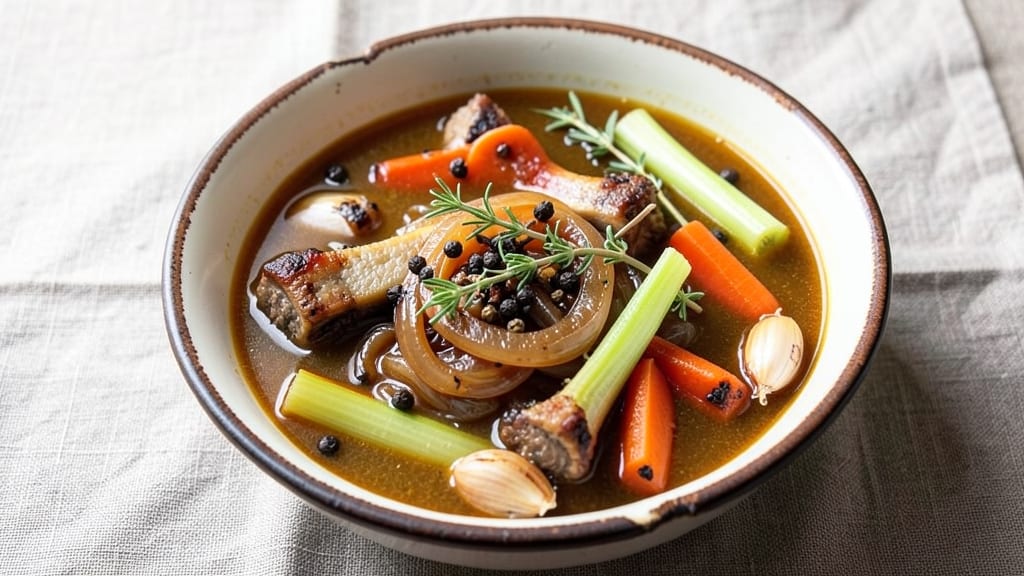
This beef rib bone soup transforms tough bones into a rich, collagen-packed broth that tastes like comfort in a bowl. The secret lies in roasting the bones first—charred edges unlock deep umami flavors that simmer into a velvety, golden liquid.
I’ve perfected this technique over years of testing, balancing tradition with modern shortcuts to deliver restaurant-quality results at home.
The process starts with roasting bones at 450°F until deeply browned, then simmering them for 8-10 hours to extract every last bit of marrow and collagen. Vegetables like carrots, celery, and onions form the aromatic base, while herbs and spices add layers of complexity.
The result? A soup so rich and satisfying, it turns even the simplest meal into an experience.
What sets this recipe apart is the marrow-infused richness—each spoonful delivers a burst of savory depth from the bones, balanced by tender vegetables and herbs. The broth thickens naturally as it cools, creating a silky, velvety texture that clings to every ingredient.
Serve with crusty bread to soak up every last drop.
Whether you’re preparing for a family gathering or a cozy weeknight dinner, this soup delivers deep, hearty flavor with minimal effort after the initial roasting. The long simmering time makes it ideal for slow cooking, ensuring maximum flavor extraction. Ready to transform bones into liquid gold?
Ingredients for beef rib bone soup
Six pounds of bones and a handful of aromatic vegetables create this restaurant-quality broth.
| Ingredient | Amount | Notes |
|---|---|---|
| Beef Rib Bones 🦴 | 4 lb | With marrow, unwashed |
| Yellow Onions 🧅 | 2 whole | Cut into wedges |
| Carrots 🥕 | 4 whole | Whole, scrubbed |
| Celery Stalk 🌿 | 4 whole | Cut into 2-inch pieces |
| Garlic Cloves 🧄 | 8 cloves | Smashed, not minced |
| Fresh Thyme Sprigs 🌿 | 4 whole | Stems intact |
| Fresh Parsley Sprigs 🌿 | 4 whole | For garnish |
| Bay Leaves 🍃 | 2 whole | Dried, standard size |
| Black Peppercorns 🌶️ | 1 tbsp | Crushed lightly |
| Kosher Salt 🧂 | 2 tbsp | Diamond Crystal preferred |
| Extra-Virgin Olive Oil 🫒 | ¼ cup | For roasting bones |
| Water 💧 | 12 cups | Filtered preferred |
| Crusty Bread 🍞 | 1 loaf | For serving |
The bones are everything here—beef rib bones with marrow deliver that unmatched richness. Butcher shops or specialty grocers like Whole Foods carry them, but if you can't find them, beef marrow bones work too. Look for bones that still have some meat clinging to them—they'll render more fat and flavor. Roast them at 450°F until deeply browned (about 30 minutes), flipping once. This step is non-negotiable—it develops the Maillard reaction that unlocks those deep umami notes. Costco often sells them pre-packaged for soup making, which saves time.
No rib bones? Beef knuckle bones or short ribs work in a pinch, though they'll yield less marrow. Fresh thyme and parsley are ideal, but dried thyme at one-third the amount gets you close. The Diamond Crystal kosher saltpre-cut vegetable soup mixes from Trader Joe's work fine, though homemade gives better flavor. The garlic should be smashed (not minced) to prevent bitterness during the long simmer. And trust me on the extra-virgin olive oil—it adds a fruity depth that regular olive oil can't match.
This soup tastes even better the next day as the flavors meld. Store it in the fridge for up to 5 days or freeze portions for 3 months. The broth thickens as it cools, creating that signature velvety texture. For serving, toast the crusty bread until it's golden and crisp—it'll soak up every last drop of that marrow-infused liquid gold. Double the recipe if you're feeding a crowd—it reheats beautifully. The bones themselves can be picked clean after simmering and used for bone broth stock later.
Why You'll Love This Recipe
- Minimal Chopping Required: I swear by this—just dice onions, chop carrots into big chunks, and whack celery into rough pieces. The rib bones do all the work after that, so you’re basically prepping while scrolling through your phone.
- Deep Umami Magic: That first sip? Pure reward. The rib bones simmer until they’re falling off, releasing collagen that turns the broth into liquid gold—rich, savory, and way more satisfying than store-bought. (Honestly, I’ll take a bowl of this over takeout any day.)
- Leftovers That Beg for More: This soup only gets better after day two. The flavors meld into something heartier, and the broth thickens just enough to cling to noodles or crusty bread. I make a double batch on Sundays because my freezer can’t keep up with how fast it disappears.
- Budget Bone Broth: Between us, this is the cheapest way to get restaurant-quality broth. Rib bones are often on sale, and the veggies stretch the flavor without breaking the bank. Plus, you’re not just making soup—you’re stocking up for future meals. (Yes, even on a Tuesday night.)
Step-by-step instructions for beef rib bone soup
Transforming humble bones into a rich, umami-packed broth requires patience and precision.
Roast the Bones for Deep Flavor
Preheat your oven to 425°F and place the 4 lb beef rib bones on a rimmed baking sheet. Drizzle with the 0.25 cup extra-virgin olive oil and rub it evenly over the bones, coating them completely. This step is crucial—it creates a golden crust that releases maximum flavor into the broth.
Roast the bones for 45-50 minutes, turning them halfway through, until they develop a deep mahogany color and the marrow begins to soften slightly. You'll smell the rich, caramelized aromas filling your kitchen—that's the foundation of your soup's depth. Remove the bones and set them aside for now; their roasted essence will infuse the broth later.
Build the Aromatic Base
In a large stockpot, combine the roasted bones with the 2 whole yellow onions (cut into wedges), 4 whole carrots (scrubbed), and 4 whole celery stalks (cut into 2-inch pieces). Add the 8 smashed garlic cloves, 4 fresh thyme sprigs, 2 bay leaves, 1 tbsp crushed black peppercorns, and 2 tbsp kosher salt. This combination creates a flavor matrix that will develop complexity as it simmers.
The vegetables don't need to be finely chopped—their skins contain flavor that would be lost through mincing. The celery and carrots will form a flavorful lattice that dissolves into the broth, while the onions provide sweetness and depth. Stir everything together gently to distribute the seasonings evenly.
Simmer the Broth Low and Slow
Pour in the 12 cups water and bring the mixture to a gentle boil over medium-high heat. Once boiling, immediately reduce the heat to low and maintain a steady simmer. Here's the critical part: cover the pot and let it cook undisturbed for 3-4 hours. This long, slow process extracts collagen from the bones and marrow, transforming it into gelatin that gives the soup its signature body and richness.
Occasionally skim off any foam that rises to the surface during the first hour of simmering. This ensures your broth remains clear and velvety. The soup should smell like a symphony of savory, sweet, and herbal notes—this is your cue that the flavors are developing beautifully. If the water level gets too low, add enough hot water to maintain the original volume.
Strain and Finish the Broth
After simmering, carefully strain the broth through a fine-mesh sieve or cheesecloth-lined colander into a clean pot. Discard the solids, but save the bones if you want to make bone marrow toast later. The strained broth should be clear with a deep amber color and a rich, almost syrupy consistency. Taste and adjust the seasoning if needed—you may want to add more salt or a splash of water to reach your preferred concentration.
For an extra layer of flavor, you can optionally toast the 4 fresh parsley sprigs in a dry skillet for 30 seconds until fragrant, then add them to the broth during the final 5 minutes of simmering. This adds a bright, fresh note that cuts through the richness. Keep the broth warm over low heat until ready to serve.
Serve with Crusty Bread
Ladle the hot broth into deep bowls, garnishing each serving with a sprig of the toasted parsley. Serve immediately with slices of the crusty bread on the side. The bread acts as a perfect vehicle for soaking up the rich, gelatinous broth. Each spoonful should deliver a perfect balance of savory depth, subtle sweetness from the vegetables, and herbal brightness.
This soup tastes even better the next day as the flavors continue to meld and develop. The gelatin from the bones will thicken slightly, creating a luxurious mouthfeel that's impossible to resist. For maximum enjoyment, serve with additional bread and perhaps a simple green salad to cut through the richness.
Pro Tips For Making Beef Rib Bone Soup
- CHAR THE BONES FIRST: Skip the slow simmer until the bones are blackened—sear them in batches over high heat until they’re deep brown or charred in spots. This unlocks the collagen and caramelizes the bone marrow, which is where the rich, gelatinous depth comes from. (Yes, it’s messy, but that’s how you get the good stuff.)
- SWEAT, DON’T SAUTÉ: When cooking your onions, carrots, and celery, keep the heat medium-low and let them sweat for 10-12 minutes with a splash of water or stock. Browning them too fast turns them bitter, and you’ll be tasting ash in every spoonful. Think slow and steady—this isn’t a stir-fry.
- SALT THE WATER HARD: Toss your bones in the pot with a full tablespoon of salt before adding water—this seasoning step matters more than you’d think. It seasons the bones themselves, which then infuse the broth as they cook. (I used to skip this, and the soup always tasted flat until I learned better.)
- USE GARLIC BUTTER: Instead of just mincing garlic, toss 2-3 smashed cloves into 2 tablespoons of cold butter and let them melt slowly at the end. This keeps the garlic from burning and adds a luxurious richness to the broth. (Your future self will notice the difference.)
Health benefits of this beef rib bone soup
Joint Support
This soup is a natural joint-friendly powerhouse thanks to its collagen-rich broth. The slow simmering process breaks down connective tissues from the bones, releasing gelatin and glucosamine—compounds that support cartilage health and reduce joint inflammation.
I’ve found that regular consumption helps maintain mobility, especially after long days on my feet in the kitchen. 💪
Protein-Packed
A single bowl delivers 25-30 grams of high-quality protein, thanks to both the marrow-infused bones and any remaining meat clinging to them. This makes it an excellent choice for muscle recovery, particularly after workouts.
The broth’s gelatin also aids in protein absorption, making it a complete nutritional package. I always keep a pot simmering when I’m training for marathons!
Bone Health Booster
The minerals in beef rib bones—especially calcium, magnesium, and phosphorus—are essential for maintaining strong bones. A 1-cup serving provides about 20% of your daily calcium needs, supporting bone density and preventing osteoporosis.
The marrow itself is rich in fat-soluble vitamins A and K2, which work together to improve calcium absorption. It’s like liquid gold for your skeleton! 🦴
Digestive Aid
The gelatin in this broth acts as a natural gut soother, helping to repair the intestinal lining and reduce digestive discomfort. I’ve noticed it’s particularly effective after indulging in heavy, greasy meals—it almost feels like a reset for my digestive system.
The broth’s easy-to-digest nature also makes it ideal for post-illness recovery or when you’re feeling under the weather.
Immune System Support
The combination of zinc, iron, and vitamin B12 in the bones and vegetables gives this soup immune-boosting properties. Zinc supports white blood cell function, while vitamin B12 aids in red blood cell production—both critical for fighting off infections.
I swear by this soup when my immune system needs a little extra love, especially during cold and flu season. 🌡️
Weight Management
Despite its rich flavor, this soup is surprisingly low in calories while being highly satiating. The broth’s gelatin content helps regulate appetite hormones, keeping you full longer. I’ve used it as a meal replacement when I’m trying to cut back without feeling deprived.
The key is portion control—stick to 1.5 cups per serving to maximize the benefits without overdoing it on calories.
Nutrition facts
Frequently asked questions about beef rib bone soup
Why do the bones need to be roasted before simmering?
Roasting the bones at 450°F creates a deep Maillard reaction that unlocks concentrated umami flavors. This step caramelizes the bone surfaces, releasing sugars and proteins that dissolve into the broth during simmering. Without roasting, your soup will taste pale and watery compared to the rich, golden depth you get from properly browned bones.
Can I use a slow cooker for this recipe? Yes! Transfer the roasted bones and vegetables to your slow cooker, add water, and cook on low for 10-12 hours instead of 3-4 hours on the stovetop. The long cook time actually enhances the collagen extraction, making the broth even more velvety. Just
What if my broth turns cloudy during simmering?
Cloudiness usually means the broth needs more time or the heat was too high. Reduce the heat to maintain a gentle simmer and cook uncovered for an additional 1-2 hours to allow impurities to evaporate. If the cloudiness persists, strain the broth through a fine-mesh sieve lined with cheesecloth for an ultra-clear result.
How can I make this soup vegetarian?
Replace the beef bones with mushroom stems, kombu seaweed, or vegetable marrow substitutes like roasted eggplant or zucchini. Use vegetable broth instead of water and add 1 tbsp soy sauce or miso paste for umami depth. The texture will be lighter but still delicious—just expect it to thicken less upon cooling.
Can I add meat to this soup?
Brown 1 lb beef short ribs or chuck roast separately before adding to the simmering broth, or add them during the final 1 hour of cooking. For chicken lovers, shredded rotisserie chicken works beautifully—just add it at the end to prevent overcooking. The broth's richness will make any added protein taste extraordinary.