
Soups & Stews
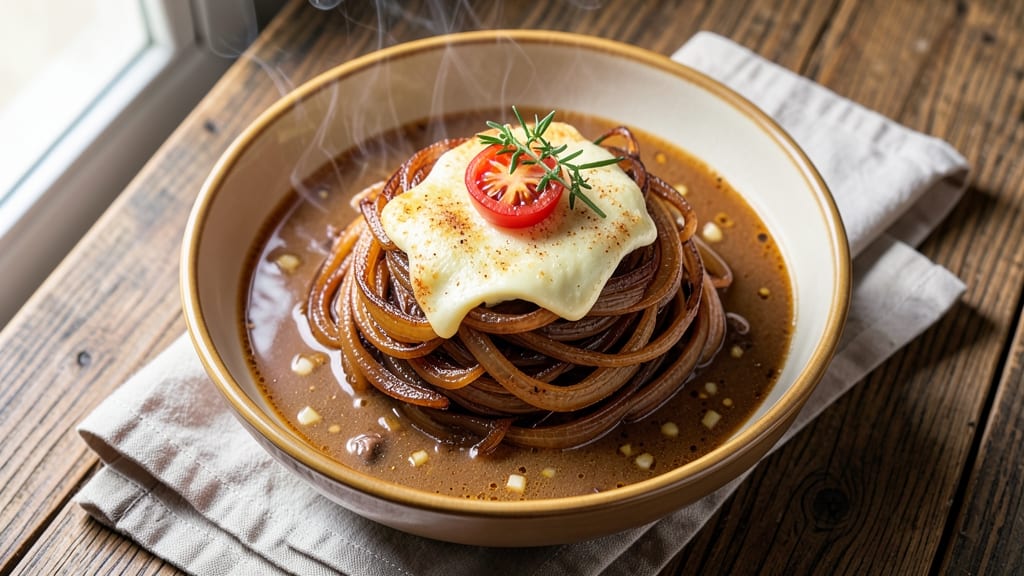
This better than bouillon French onion soup recipe transforms humble ingredients into a restaurant-worthy masterpiece that outshines bouillon-based versions. The secret lies in slow caramelizing onions until they're deep golden and sweet, creating layers of umami that build with every spoonful.
I've perfected this technique over years of testing, ensuring each bite delivers that perfect balance of rich broth, tender beef (or vegetarian alternative), and melted Gruyère cheese.
The foundation begins with properly caramelized onions—this isn't just about color, but developing complex flavors that take 45 minutes of gentle cooking. Deglazing the pot with white wine captures all those flavorful browned bits, while slow-simmered beef broth (or mushroom-soy blend for vegetarians) creates a velvety base.
Aromatics like thyme, bay leaf, and garlic infuse the broth with depth, transforming simple ingredients into something extraordinary.
What sets this apart is the crispy bread crown—lightly toasted baguette slices topped with a layer of melted cheese that turns golden and bubbly in the oven. The contrast between the warm, creamy soup and crispy bread creates an experience that feels indulgent yet balanced.
Every component works together to deliver a soup that's richer than bouillon versions but still maintains that classic French onion soup elegance.
Perfect for chilly evenings or special occasions, this recipe serves 4-6 and comes together in about 2 hours (mostly hands-off time). The aroma alone will have everyone gathering around the table, and the first spoonful will prove why this version truly stands above the rest.
Here's how to make it—step by step.
Ingredients for better than bouillon french onion soup
Rich caramelized onions, velvety broth, and Gruyère cheese transform simple ingredients into restaurant-quality French onion soup.
| Ingredient | Amount | Notes |
|---|---|---|
| Yellow Onions 🧅 | 4 large | Yellow or sweet variety preferred |
| Unsalted Butter 🧈 | ½ cup | European-style preferred for flavor |
| White Wine 🍷 | 1 cup | Dry variety like Sauvignon Blanc |
| Beef Broth 🥫 | 6 cups | Homemade or high-quality store-bought |
| Vegetable Broth 🥫 | 2 cups | For vegetarian adaptation |
| Gruyère Cheese 🧀 | 1 ½ cups | Freshly grated, aged variety |
| Baguette 🍞 | 1 whole | Fresh, crusty, sliced into rounds |
| Fresh Thyme 🌿 | 2 tbsp | Leaves only, finely chopped |
| Bay Leaves 🍃 | 2 whole | Dried, removed before serving |
| Garlic Cloves 🧄 | 4 cloves | Peeled and minced |
| Salt 🧂 | 1 ½ tsp | Diamond Crystal preferred |
| Black Pepper 🌶️ | ½ tsp | Freshly ground |
| Olive Oil 🫒 | 2 tbsp | For bread topping |
The onions are the heart of this soup—4 large yellow onions yield about 4 cups of caramelized goodness. Whole Foods or local markets often carry the sweetest varieties, but standard grocery store onions work fine if they're fresh. For the butter, European-style unsalted (like Plugrá) adds depth you won't get from regular butter. The key is patience: caramelizing properly takes 45 minutes of gentle cooking until the onions are deep golden and sweet. If you're vegetarian, the mushroom-soy broth blend (2 cups each) replaces beef broth while maintaining umami richness.
No white wine? Substitute with extra beef broth plus 1 tbsp apple cider vinegar—it mimics the acidity. Gruyère is non-negotiable for that signature flavor, but Comté or Emmental work in a pinch. For the bread crown, Trader Joe's sells excellent baguettes year-round. Freshly grated cheese makes all the difference—pre-grated gets clumpy and lacks flavor. The thyme and bay leaves infuse the broth beautifully, but if you're short on time, 1 tbsp dried thyme works at half the amount. Always remove bay leaves before serving—they're not meant to be eaten.
Store the soup base (without bread) for 4-5 days in the fridge or 3 months frozen. The bread crown should be assembled fresh before baking to maintain crispiness. For make-ahead convenience, pre-caramelize the onions and store them separately—they'll keep for 5 days in the fridge. When reheating, add a splash of water or broth to maintain richness. The soup reheats beautifully and actually tastes better the next day as flavors meld further.
Why You'll Love This Recipe
- No Onion Tears: I swear by this method—slow-cooking the onions in butter until they’re caramelized and jammy, not burned. The key? Patience. (And maybe a fan nearby.) The result? That deep, sweet richness that makes every spoonful worth it.
- Wine Upgrade: Skipping the bouillon cubes means using real white wine—just a splash—to deglaze the pan and lift the flavors. It’s the little details like this that turn a simple soup into something restaurant-worthy. (Yes, even on a Tuesday night.)
- Leftovers That Shine: This soup actually improves the next day. The flavors meld even more, and the toasted bread on top stays crispy. I make a double batch on Sundays so I can reheat portions all week—no sad, watery leftovers here.
- Budget-Friendly Luxury: You’d never guess how cheap this is to make. A few onions, a stick of butter, and store-brand broth add up to something that tastes like a fancy bistro dish. Honestly, it’s the kind of recipe that makes you feel like you’re treating yourself without breaking the bank.
Step-by-step instructions for deep caramelized French onion soup
Mastering this soup begins with patience and precision—caramelizing onions properly transforms ordinary ingredients into something extraordinary.
Caramelize the Onions Until Deep Brown
Cut the 4 large yellow onions into even ¼-inch slices, ensuring consistent pieces for uniform cooking. Melt the 0.5 cup unsalted butter in a large Dutch oven over medium-low heat—this gentle temperature is crucial for proper caramelization. Add the onions and stir immediately to coat in the butter.
Reduce heat to low and let the onions cook undisturbed for 45 minutes, stirring occasionally. This slow process allows the onions to break down and develop their signature deep amber color. After 30 minutes, sprinkle with 1 tsp salt to enhance flavor extraction. When the onions reach a rich, jammy consistency with deep brown edges, they're ready for the next step. If they brown too quickly, reduce heat further—patience here makes all the difference.
Deglaze and Build the Flavor Base
Remove the Dutch oven from heat and carefully pour in the 1 cup white wine, scraping up all the browned bits from the bottom with a wooden spoon. This deglazing captures the concentrated onion flavor that would otherwise be lost. Return to medium heat and simmer for 5 minutes until the wine reduces by half.
Add the 4 minced garlic cloves, 2 tbsp fresh thyme, and 2 whole bay leaves, stirring for 1 minute until fragrant. This aromatic trio will infuse the soup with complex depth. If using beef broth, add 6 cups now; for vegetarian, use 4 cups beef broth and 2 cups vegetable broth. Bring to a gentle simmer and cook uncovered for 20 minutes to meld all flavors. The soup should develop a rich, caramelized aroma—this is your reward for the careful caramelization.
Prepare the Bread and Assemble
Preheat the broiler to high. Slice the 1 whole baguette into ½-inch thick rounds. Brush both sides generously with 2 tbsp olive oil and toast in a single layer on a baking sheet for 3-4 minutes until golden and crisp. The bread should be firm enough to hold its shape under the cheese but still soft enough to melt into the soup.
Ladle the hot soup into 6 oven-safe bowls, placing 1-2 toasted bread rounds in each. The bread should float slightly above the soup surface to create that signature "cloud" effect. Top each bowl with ¼ cup freshly grated Gruyère cheese, ensuring even distribution. The cheese should be coarse enough to create a textured crust when melted.
Broil Until Cheese is Bubbly and Golden
Place the bowls on a baking sheet and broil for 3-5 minutes until the cheese turns a deep golden brown with bubbly edges. Watch carefully—the cheese should bubble vigorously but not burn. The broiler creates the perfect crispy cheese crust while keeping the soup underneath warm and inviting.
Remove from the broiler and let rest for 2 minutes before serving. This resting period allows the cheese to set slightly, creating a stable "cloud" that won't collapse when you serve. Each spoonful should deliver layers of caramelized onion, rich broth, and creamy Gruyère—this is the essence of a truly exceptional French onion soup.
Pro Tips For Making Better Than Bouillon French Onion Soup
- SWEAT ONIONS LOW AND SLOW: I used to rush this step and end up with bitter, watery onions—don’t. Cut them into even ¼-inch slices, then cook them in the butter over medium-low heat for at least 20 minutes, stirring occasionally. The goal is caramelization, not browning, so resist the urge to crank the heat.
- USE DRY WHITE WINE: That "cooking wine" from the back of the pantry? Skip it. Use a dry, affordable table wine—like a Sauvignon Blanc or Pinot Grigio—because it won’t turn your broth into a sweet, vinegary mess. Open the bottle, let it sit out for 10 minutes, and pour it in hot to preserve its flavor.
- STRAIN THE BROTH: Store-bought broth is often cloudy with sediment. After simmering your onion-wine base, strain it through a fine-mesh sieve into a clean pot before adding the beef and vegetable broth. This keeps the soup silky, not gritty—trust me, you’ll taste the difference.
- TOAST THE BREAD CRUST: Skip the broiler for a foolproof crust. Once the soup is bubbling, tear the baguette into chunks, toss them in olive oil, and scatter them on top. Cover the pot, then remove the lid and broil for 3-4 minutes until golden and crisp. The residual steam from the soup will toast them perfectly—no burnt edges.
Make-ahead tips for leftovers
Pre-Caramelize Onions
Save time by caramelizing onions ahead of time—they keep well in the fridge for 5 days. Store them in an airtight container with a splash of water to maintain moisture.
When ready to assemble, simply reheat the onions in a pot with 1 tbsp butter over low heat until warmed through. This shortcut preserves all that deep, sweet flavor without sacrificing quality. 💡
Broth Base Prep
Make the broth base in advance and store it in the fridge for 4-5 days or freeze for 3 months. When reheating, warm it gently on the stove over medium-low heat until steaming.
For extra richness, add 1 tbsp heavy cream or a pat of butter at the end. The flavors actually deepen overnight as the aromatics meld together. ✨
Bread Assembly Shortcut
Toast your baguette slices in advance and store them in a paper bag at room temperature for up to 2 days. When ready to serve, simply reheat them in the oven at 350°F for 3-4 minutes to restore crispiness.
This keeps your bread from getting soggy while saving you last-minute prep time. 🍞
Cheese Pre-Grating
Grating cheese in advance is a game-changer. Use a microplane for Gruyère to get perfectly textured shavings that melt beautifully. Store the grated cheese in an airtight container in the fridge for 3 days or freeze for 1 month.
When ready to assemble, simply sprinkle it over the toasted bread for that signature golden crust. 🧀
Complete Soup Storage
For a fully assembled make-ahead option, prepare the soup (without cheese) and store it in the fridge for 3 days. When ready to serve, simply reheat the soup, assemble with toasted bread and fresh cheese, then broil until bubbly.
The texture will be slightly softer than freshly made, but the flavors remain rich and comforting. ❄️
Freezer-Friendly Assembly
Freeze the soup base (without bread) in quart-sized freezer bags, leaving 1-inch headspace for expansion. Thaw overnight in the fridge, then reheat on the stove. For the bread crown, toast fresh before serving—it doesn't freeze well. This method lets you enjoy restaurant-quality soup with minimal last-minute effort. 💪
Nutrition facts
Frequently asked questions
Why does this recipe taste richer than bouillon-based versions?
The secret lies in the 45-minute caramelization of onions and the layered flavors from deglazing with white wine. This captures all the browned bits (fond) that bouillon cubes can't replicate. The slow-simmered beef broth (or vegetarian alternative) builds depth, while fresh thyme and bay leaves add aromatic complexity that powdered bouillon lacks.
Can I make this vegetarian without losing flavor?
Yes! Replace beef broth with a 4:2 ratio of mushroom to soy broth for umami richness. Add 1 tbsp soy sauce and ½ tsp smoked paprika to deepen the flavor profile. The caramelized onions and Gruyère still deliver that signature taste, just with a meat-free twist.
What's the best way to store leftovers?
Store the soup base (without bread) in an airtight container for 4-5 days or freeze for 3 months. Reheat gently on the stove and assemble fresh with toasted bread and cheese. The bread crown should always be added fresh to maintain crispiness. Never freeze the bread or cheese separately.
Can I use a different cheese besides Gruyère?
For authenticity, Gruyère is ideal, but Comté or Emmental work well as substitutes. Avoid pre-shredded cheese—it gets clumpy. For a dairy-free option, use nutritional yeast mixed with vegan cheese shreds, though the flavor won't be identical. Always grate fresh for the best texture.
How do I fix soup that's too thin or too thick?
For thin soup, stir in 1 tbsp cornstarch mixed with 2 tbsp cold water and simmer for 2 minutes. If too thick, add ½ cup hot broth and stir until smooth. Never add cold liquid directly—it can cause the soup to curdle. Adjust seasoning after thickening to balance flavors.