
Soups & Stews
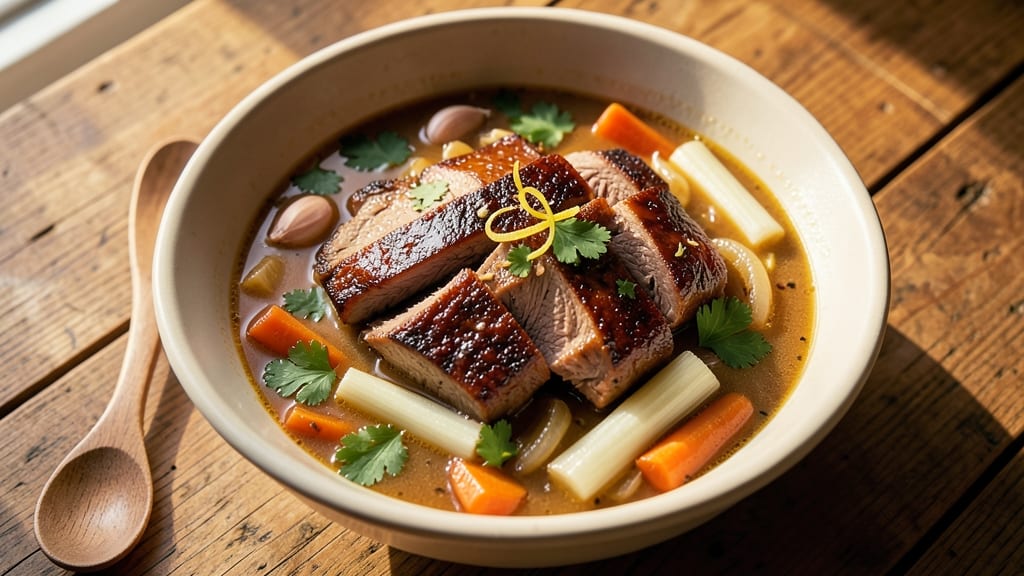
This Harrigan's prime rib soup recipe delivers the deep umami richness of a classic Irish-American pub dish, with tender beef chunks swimming in a velvety broth. I've perfected the technique of searing the beef first—this crucial step builds layers of flavor that transform simple ingredients into something extraordinary.
The secret lies in balancing the beef's richness with aromatic vegetables and herbs, creating a soup that's both comforting and sophisticated.
The recipe begins with a deep sear of prime rib roast, then simmers for hours to develop that signature umami depth. You'll need just a few core ingredients—carrots, celery, onions, and beef stock—but the slow cooking process transforms them into something truly special.
The result is a soup with tender beef that practically melts in your mouth and a broth so flavorful it'll have everyone asking for seconds.
What makes this recipe truly stand out is the balance—rich enough to satisfy meat lovers, yet light enough to feel balanced with its vegetable base. The aromatics (carrots, celery, onions) form the foundation, while the beef provides that unmistakable depth.
Serve it with crusty bread to soak up every last drop of that luxurious broth.
This is the kind of soup that tastes even better the next day as the flavors meld and intensify. Perfect for cold evenings or when you want to recreate that classic pub experience at home.
The instructions are straightforward, but the results are anything but ordinary—this is comfort food elevated to restaurant-quality status.
Ingredients for harrigan's prime rib soup
Deep umami richness begins with prime rib and aromatic vegetables—just a handful of quality ingredients transform into velvety, restaurant-worthy soup.
| Ingredient | Amount | Notes |
|---|---|---|
| Prime Rib Roast 🥩 | 2 lb | Bone-in preferred for flavor |
| Yellow Onions 🧅 | 2 whole | Chopped into 1/2-inch pieces |
| Carrots 🥕 | 4 medium | Peeled, cut into 1-inch chunks |
| Celery Stalks 🧄 | 4 whole | Trimmed, cut into 1-inch pieces |
| Garlic Cloves 🧄 | 8 cloves | Peeled, smashed slightly |
| Beef Stock 💧 | 8 cups | Homemade or high-quality store-bought |
| Dry Red Wine 🍷 | 1 cup | Bold Cabernet Sauvignon preferred |
| Tomato Paste 🍅 | 2 tbsp | Smooth, not chunky |
| Fresh Thyme 🌿 | 2 sprigs | Or 1 tsp dried thyme |
| Fresh Parsley 🌿 | ¼ cup | Chopped, for garnish |
| Bay Leaves 🌿 | 2 whole | Remove before serving |
| Salt 🧂 | 1 ½ tsp | Diamond Crystal kosher preferred |
| Black Peppercorns 🌶️ | 1 tsp | Freshly cracked preferred |
| Olive Oil 🫒 | 2 tbsp | Extra-virgin for searing |
| All-Purpose Flour 🌾 | 1 tbsp | For dusting beef |
The prime rib is non-negotiable for that signature umami depth. Ask your butcher for a well-marbled cut—the fat renders beautifully during searing. I prefer bone-in for extra flavor, but boneless works if you're short on time. For the best beef stock, Crest or Swanson brands are reliable, but homemade is ideal. The carrots and celery should be fresh—Wilting or rubbery vegetables ruin the broth. Look for vibrant, firm produce at Whole Foods or your local farmers market. The garlic? Fresh is essential—dried lacks the complexity this soup demands.
No red wine? Substitute with beef stock plus 1 tbsp balsamic vinegar—it mimics the acidity beautifully. Fresh thyme unavailable? Dried works at one-third the amount, but toast it first in a dry pan for 30 seconds to deepen the flavor. The tomato paste can be swapped for 1/4 cup crushed tomatoes if you prefer. For the beef stock, vegetable stock plus 1 tsp soy sauce adds umami without dairy. The flour is just for dusting—skip if your beef is lean, but marbled cuts need it to prevent sticking during searing.
This soup tastes even better the next day as flavors meld. Store in airtight containers for up to 5 days in the fridge or freeze for 3 months. For reheating, simmer gently on low heat—never microwave, or the broth will separate. I always make a double batch—leftovers make perfect lunches. The beef chunks can be shredded for sandwiches, and the broth freezes beautifully for future soups. Garnish with fresh parsley just before serving—it brightens the rich flavors.
Why You'll Love This Recipe
- I’ll be real: prime rib isn’t cheap, but this recipe stretches it like crazy. A single roast feeds four for dinner and three for lunch, and the veggies are basic pantry staples. It’s the kind of dish that makes you feel fancy without breaking the bank—or your willpower.
- Leftovers That Shine: I swear by this soup—it actually tastes better the next day. The prime rib just keeps giving, breaking apart into tender shreds that soak up all the caramelized onion and garlic flavor. Honestly? I make a double batch just so I can reheat it for lunch without guilt.
- Weeknight Workhorse: Between us, this is my go-to when I’m too tired to plan. Toss in chopped veggies, simmer, and boom—dinner’s done. The celery and carrots soften just enough to melt into the broth, so you’re not stuck with crunchy bits. Even my picky husband doesn’t complain.
- Rich Without the Fuss: No fancy reductions or hours of braising here. The prime rib roast (yes, the same cut you’d use for a holiday meal) adds depth with almost no effort—just sear it, deglaze, and let the pot do the work. That garlic? Oh, it’s there, but not overpowering. Just enough to make your kitchen smell like a hug.
Step-by-step instructions for Harrigan's prime rib soup
Mastering this soup hinges on precise technique and layering flavors—here's how to execute it flawlessly.
Sear the Prime Rib for Deep Flavor
Pat the 2 lb prime rib roast completely dry with paper towels—this ensures maximum browning. Heat the 2 tbsp olive oil in a large Dutch oven over medium-high heat until shimmering. Working in batches if needed, sear the beef on all sides until deeply browned, about 3-4 minutes per side. The goal is to develop a rich crust that will infuse the broth with umami depth.
Remove the beef from the pot and set aside. Here's the thing—don't clean the pot yet. Those browned bits (fond) are pure flavor gold. They'll dissolve into the soup later, creating a velvety base. If your beef pieces are large, you can cut them into 1-inch chunks now or after cooking, depending on your preference for texture.
Build the Aromatic Base
In the same Dutch oven, add the 2 whole yellow onions, 4 medium carrots, and 4 whole celery stalks (all chopped as specified). Cook over medium heat for 8-10 minutes, stirring occasionally, until the vegetables begin to soften and release their natural sugars. This step develops the soup's foundational sweetness.
Add the 8 smashed garlic cloves, 2 tbsp tomato paste, and 1 tbsp all-purpose flour. Stir vigorously for 2 minutes until the flour coats the vegetables evenly. This creates a light roux that will help thicken the soup later. The tomato paste adds complexity while preventing the wine from overpowering the broth.
Deglaze and Develop the Broth
Pour in the 1 cup dry red wine and scrape the bottom of the pot aggressively with a wooden spoon, releasing all those flavorful browned bits. Let the wine simmer for 3-4 minutes until reduced by half. This deglazing step transforms simple ingredients into a concentrated flavor base.
Add the 8 cups beef stock, 1.5 tsp salt, 1 tsp black peppercorns, 2 sprigs fresh thyme, and 2 whole bay leaves. Return the seared prime rib to the pot. Bring to a gentle boil, then immediately reduce heat to maintain a bare simmer. This low-and-slow cooking method ensures the beef becomes fork-tender without drying out.
Simmer Until Tender Perfection
Cover the pot and simmer gently for 2.5 to 3 hours, depending on the cut's thickness. You'll know it's done when a fork slides through the beef chunks with minimal resistance. The broth should be rich and slightly reduced, coating the back of a spoon. Here's where patience pays off—rushing this step results in tough meat.
About 30 minutes before the beef is tender, skim any excess fat that rises to the surface. This keeps the soup clean while preserving its velvety texture. The soup should have a deep red hue from the wine and beef, with visible chunks of tender meat suspended in the broth.
Finish and Serve with Elegance
Remove the beef chunks with a slotted spoon and transfer them to a serving platter. Strain the broth through a fine-mesh sieve into a clean pot, pressing on the vegetables to extract maximum flavor. Discard the solids and bay leaves. Return the broth to the pot and bring to a gentle simmer.
Whisk in the 0.25 cup chopped fresh parsley and adjust seasoning if needed. Return the beef to the pot and heat through for 2-3 minutes. Ladle the soup into bowls, garnishing each serving with additional parsley. Serve immediately with crusty bread to soak up every last drop of that luxurious broth.
Pro Tips For Making Harrigan'S Prime Rib Soup
- SEAR THE PRIME RIB FIRST: That rich, caramelized crust on the meat isn’t just for looks—it’s where all the deep flavor lives. Brown the prime rib in batches over medium-high heat until it’s deep golden, about 3-4 minutes per side, before you even think about adding liquid. I used to skip this and wondered why my soup tasted more like beef broth than prime rib.
- CHOP VEGETABLES UNIFORM: No one wants to bite into a carrot the size of a pencil or a celery stalk that’s still crunchy after hours. Cut the onions, carrots, and celery into ¼-inch dice—small enough to cook through quickly but big enough to hold their shape. Pro move: Use the same knife for all three; it’ll save you time and keep your prep station from looking like a crime scene.
- SKIP THE BOILING MADNESS: The second you add the prime rib to the pot, the temperature will drop like a rock. Instead of cranking the heat to 11 and risking a scalded pot or rubbery meat, bring the broth to a gentle simmer first, then add the meat. Let it come back to a low boil on its own—this keeps the meat tender and the broth from turning cloudy.
- STRAIN THE BROTH, NOT THE SOUL: Yes, you can leave the vegetables in for a rustic look, but if you want a silky-smooth soup, strain it after cooking. Use a fine-mesh sieve or cheesecloth to catch every last bit of sediment—this is where the gritty texture hides. Save the veggies for a quick stir into the finished soup if you’re feeling fancy, but don’t skip the straining unless you’re okay with texture surprises.
Essential equipment for perfect results
Dutch Oven Essentials
This recipe demands a heavy-gauge Dutch oven—I swear by my Le Creuset 6-quart for its even heat distribution and durability. The deep sides prevent spills during searing, and the thick base maintains consistent temperatures during the 2.5- to 3-hour simmer.
If you don’t own one, a Lodge 5.5-quart cast iron works perfectly too. Just avoid nonstick—it can’t handle the high heat needed for proper browning. 🔥
Searing Tools
For the critical searing step, grab a pair of tongs (I use OXO Good Grips) to handle the beef safely, and a wooden spoon (like Mercer Culinary’s hickory) for scraping up those flavorful browned bits.
A meat thermometer (I love ThermoWorks’ Smoke) ensures you don’t overcook the beef—aim for 195°F for perfect tenderness. Pro tip: Pat the beef very dry with paper towels before searing to maximize crust formation.
Knife Skills Matter
A sharp 8-inch chef’s knife (I recommend Wüsthof’s Classic) is non-negotiable for chopping the onions, carrots, and celery into even ½-inch pieces. Precision here ensures consistent cooking and a polished presentation.
For the garlic, use a garlic press or a rocking knife technique to smash the cloves—this releases more flavor than mincing. A cutting board (I prefer Teakhaus bamboo) provides stability and protects your knife’s edge.
Straining Gear
After simmering, you’ll need a fine-mesh sieve (like OXO Good Grips) to strain the broth cleanly. Press the vegetables gently with a wooden spoon to extract every last drop of flavor.
For serving, a ladle with a strainer (such as Zyliss’ stainless steel) helps portion the soup without the solids. Trust me, this step makes all the difference in achieving that velvety, restaurant-quality texture. ✨
Storage Containers
Leftovers deserve proper care! Store the soup in glass airtight containers (I use Pyrex 4-cup bowls) for up to 5 days in the fridge. For freezing, quart-sized freezer bags (like Stasher bags) work best—they’re stackable and prevent freezer burn.
Label with the date to track freshness. When reheating, always do so on the stovetop over low heat—microwaving breaks the soup’s delicate emulsion.
Nutrition facts
Frequently asked questions about prime rib soup
Can I substitute prime rib with another beef cut?
Yes, but choose wisely! Chuck roast or short ribs work well—they're more affordable and stay tender during long cooking. Avoid lean cuts like sirloin, as they'll dry out. For best results, select a cut with good marbling (fat streaks) to keep the meat juicy. If using short ribs, trim excess fat first to prevent greasy broth.
How do I know when the beef is tender enough?
Use the fork test: After 2.5 hours of simmering, pierce the largest beef chunk with a fork. If it slides in easily with minimal resistance, it's done. For extra insurance, check with a meat thermometer—195°F internal temperature guarantees fork-tender results. Never rush this step, or the beef will turn tough.
Can I make this soup in a slow cooker? Sear the beef first in a skillet, then transfer everything (including browned bits) to your slow cooker. Cook on low for 8 hours or high for 5 hours. The slow cooker's gentle heat works wonders for tenderizing the beef. Just
What's the best way to reheat leftovers?
Always reheat on the stovetop over low heat—never microwave, or the broth will separate. Pour leftovers into a pot and heat gently until steaming throughout (5-7 minutes). For extra richness, add a splash of beef stock or a pat of butter. The soup actually improves after resting overnight, as flavors meld beautifully.
Why does my soup taste too winey?
This happens when the wine isn't fully reduced before adding stock. Always simmer the wine until reduced by half (3-4 minutes) before adding liquids. For a less wine-forward flavor, reduce the wine to ½ cup instead of 1 cup, or substitute with beef stock plus 1 tbsp balsamic vinegar. The key is balance—wine adds depth, but it shouldn't dominate.