
Soups & Stews
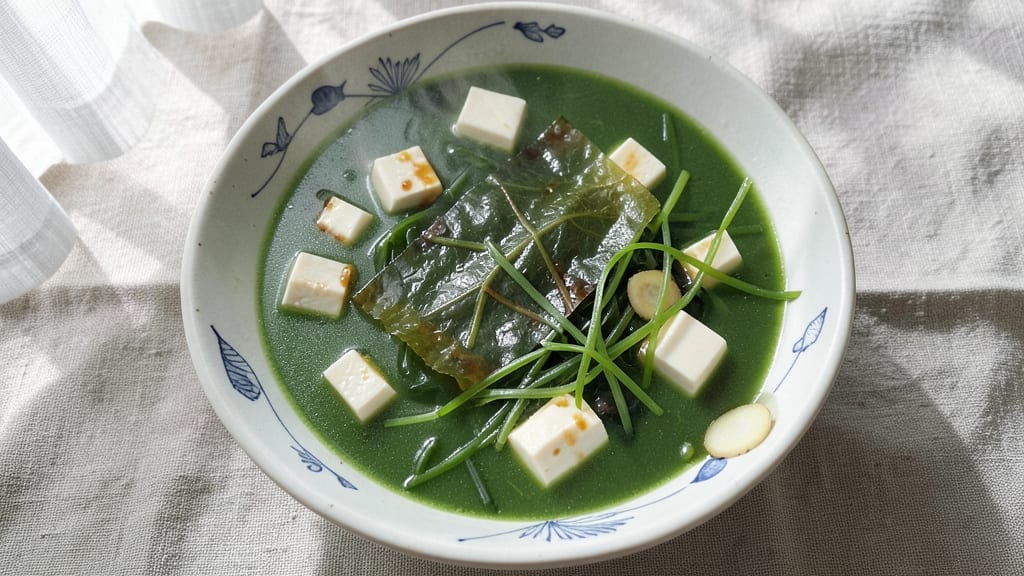
This algae soup recipe transforms simple ingredients into a deeply umami-rich broth with silky tofu and delicate wakame. Inspired by traditional Japanese aonori soups but elevated with modern plant-based techniques, it delivers restaurant-quality flavor without meat or dairy.
The secret lies in properly preparing the algae—whether nori, wakame, or spirulina—to unlock its natural savory depth while keeping the texture light and satisfying.
The process begins with a minimalist broth base—just water, kombu (seaweed), and a touch of soy sauce—to create a complex, mineral-forward foundation. Silken tofu adds protein and creaminess, while wakame contributes a gentle oceanic crunch.
Unlike heavy creamy soups, this dish relies on texture contrast and umami balance, making it both nutritious and deeply flavorful.
By the time you finish, you’ll have a silky, aromatic soup that’s perfect for chilly days or as a light yet filling meal. The broth is rich enough to stand alone, yet the tofu and wakame provide satisfying substance.
It’s the kind of dish that proves plant-based cooking can be bold, comforting, and deeply satisfying—without relying on traditional umami boosters like mushrooms or miso.
Whether you’re exploring vegan cuisine or simply curious about algae’s potential, this recipe delivers authentic Japanese-inspired flavors with a modern twist. The best part? It’s ready in under 30 minutes with minimal prep—just the right amount of effort for a restaurant-worthy result.
Ingredients for algae soup
This umami-rich broth transforms simple ingredients into a restaurant-quality algae soup with delicate textures.
| Ingredient | Amount | Notes |
|---|---|---|
| Water 💧 | 6 cups | Filtered or spring water preferred |
| Kombu Seaweed 🍃 | 1 whole | Dried, 8x10 inch sheet |
| Silken Tofu 🍫 | 12 oz | Extra-firm for better texture |
| Wakame Seaweed 🍃 | 2 tbsp | Dried, rehydrated in broth |
| Tamari or Soy Sauce 🍶 | 1 tbsp | Gluten-free tamari preferred |
| Fresh Ginger Root 🧄 | 1 inch | Thinly sliced, peeled |
| Sesame Oil 🫒 | 1 tsp | Toasted, for finishing |
| Green Onions 🧅 | 2 whole | Thinly sliced, for garnish |
| Nori Sheets 🍜 | 2 whole | For garnish, cut into strips |
| White Miso Paste 🍶 | 1 tbsp | Optional, for added depth |
| Lemon Juice 🍋 | ½ tsp | Freshly squeezed, for brightness |
| Diamond Crystal Kosher Salt 🧂 | ½ tsp | Adjust to taste |
| Black Pepper 🌶️ | ¼ tsp | Freshly ground |
The kombu and wakame are the heart of this soup—look for organic kombu sheets at specialty stores like Whole Foods or Asian markets. Koyo brand kombu is widely available and ideal for its deep umami flavor. Wakame should be dried and free of grit; rinse briefly before using. For the tofu, House Foods or Silken Tofu brands from the refrigerated section provide the best texture. If you can't find kombu, dried dulse flakes work as a substitute, though the flavor will differ slightly.
No tamari? Regular soy sauce works at a 1:1 ratio, though tamari offers a cleaner, less fermented profile. Fresh ginger is non-negotiable here—dried lacks the bright, zesty kick. If you must use dried, double the amount and toast it lightly to revive the flavor. The miso paste, while optional, adds a fermented depth that elevates the broth. If you're avoiding miso, a splash of rice vinegar can mimic some of its complexity. For the sesame oil, toasted sesame oil is essential—regular oil won't provide the nutty aroma.
Store the kombu and dried wakame in an airtight container in a cool, dark place for up to 6 months. Refrigerate the tofu in its original package until ready to use. Once prepared, this soup keeps in the fridge for 4-5 days, though the broth flavor deepens over time. For longer storage, freeze the broth separately—it reheats beautifully and maintains its silky texture. Garnishes like nori and green onions can be added fresh when serving to preserve their vibrant colors.
Why You'll Love This Recipe
- Just Five Ingredients: I swear, this is the kind of soup where you can measure everything with your eyes. Kombu and wakame soak while you boil water—no chopping, no fuss—just let the seaweed steep its umami magic into the broth. Honestly, my lazy Sundays now include this as a default.
- Umami Bomb: That first sip? Pure ocean essence with a whisper of salt from the tamari. The kombu’s deep, savory notes wake up your taste buds, while the silken tofu adds a creamy contrast—like a hug for your palate. (Yes, even on a Tuesday night.)
- Meal Prep MVP: Make a big batch on Sunday, and you’ve got lunch sorted for the week. The flavors actually improve after a day in the fridge—deeper, richer, like a fine wine. I pack it in bento boxes or reheat it for quick dinners; it’s my secret weapon for busy days.
- Budget Ocean Luxe: Seaweed is cheaper than most greens, and tofu stretches this into a full meal. A single pack of kombu and wakame feeds my family for days, and tamari adds that restaurant-quality depth without the price tag. Not the prettiest, but the taste makes up for it.
Step-by-step instructions for umami-packed algae broth
This method extracts maximum flavor while preserving delicate textures—key for authentic algae soup.
Prepare the Kombu and Wakame Foundation
Place the 1 whole kombu seaweed sheet in a clean bowl and cover with 6 cups water at room temperature. Let it soak for 15 minutes—this rehydrates the kombu and releases its natural umami compounds. The water should develop a faint seaweed aroma and turn slightly cloudy.
While the kombu soaks, rinse the 2 tbsp wakame seaweed under cold water to remove any debris. Transfer it to a small bowl and cover with 1 cup hot water (not boiling). Let it rehydrate for 10 minutes until it expands to about 3 times its original volume. The wakame should look plump and dark green—this indicates proper hydration.
Simmer the Kombu Broth
Transfer the kombu and its soaking water to a medium saucepan and bring to a gentle simmer over medium-low heat. The kombu should float near the surface—this is normal. Simmer uncovered for 20 minutes to extract deep umami flavors. You'll notice the broth develop a rich, oceanic aroma and turn a pale golden color.
Remove the kombu sheet with tongs and discard it. Strain the broth through a fine-mesh sieve into a clean pot, pressing gently on the solids to extract all flavor. The strained broth should yield about 5½ cups of clear, aromatic liquid. If you prefer a deeper color, you can reduce the broth by 10% at this stage by simmering uncovered for 5 minutes over medium heat.
Build the Flavor Base
Return the strained kombu broth to the pot and add the rehydrated wakame seaweed, 1 tbsp tamari or soy sauce, and 1 inch fresh ginger root (thinly sliced). Bring to a gentle boil over medium heat, then immediately reduce to a simmer. Cook for 8-10 minutes until the ginger becomes translucent and the wakame softens slightly.
Add the 12 oz silken tofu (cut into ½-inch cubes) and 1 tbsp white miso paste (optional). Simmer for an additional 5 minutes—the tofu should absorb the broth's flavors without breaking apart. The miso will dissolve completely, adding a subtle sweetness that balances the seaweed's brininess. Taste the broth and adjust seasoning with 0.5 tsp diamond crystal kosher salt and 0.25 tsp black pepper if needed.
Finish and Garnish
Remove the pot from heat and stir in the 0.5 tsp lemon juice and 1 tsp sesame oil. The lemon juice brightens the dish, while the sesame oil adds a nutty finish. Let the soup rest for 5 minutes to allow flavors to meld—this is crucial for depth.
Ladle the soup into bowls and garnish with thinly sliced green onions and nori strips (cut from 2 whole nori sheets). The green onions add a fresh contrast, while the nori provides a visual and textural pop. Serve immediately while the tofu is still silky and the broth is steaming hot.
Pro Tips For Making Algae Soup
- SOAK KOMBU FIRST: Toss the kombu in cold water for at least 10 minutes before boiling—this draws out the umami depth that makes your soup sing. I used to skip this and wondered why my broth tasted flat; the kombu needs time to wake up its flavor.
- CUT TOFU SMALL: Dice that silken tofu into ½-inch cubes, not chunks—it cooks faster and absorbs the broth’s saltiness evenly. Big pieces stay bland and rubbery, and nobody wants that in a delicate soup.
- ADD WAKAME LAST: Toss the wakame in at the very end, just before serving, so it doesn’t turn to mush in the simmer. It’ll rehydrate perfectly and keep that pleasant bite, not a sad, limp texture.
- SALT THE WATER: Add a pinch of salt to the initial water with kombu—it prevents the broth from tasting bitter as the seaweed steeps. I learned this after making a batch that needed extra soy sauce to fix the harshness.
Pro cooking tips for great algae soup
Kombu Extraction Trick
Never boil kombu—this destroys its delicate umami compounds. Instead, soak it in room-temperature water for 15 minutes before simmering gently. The key is patience: kombu releases flavor gradually, so simmer uncovered for 20 minutes at medium-low heat.
I use a light-colored saucepan to prevent browning, which can make the broth taste bitter. 🌡️
Wakame Hydration Hack
Use hot water (not boiling) to rehydrate wakame—this expands it faster without cooking it prematurely. The ideal ratio is 1 cup hot water to 2 tbsp dried wakame. After 10 minutes, it should triple in size and turn vibrant green.
If it stays tough, add 2 extra minutes of simmering in the broth later. Pro tip: Rinse it first to remove sand or grit that can make the soup gritty.
Tofu Texture Control
Silken tofu breaks easily, but cutting it into ½-inch cubes gives it structure while maintaining silkiness. Add it to the broth just before the final 5 minutes of simmering—any longer and it absorbs too much liquid.
For extra stability, chill the tofu in its package for 30 minutes before cubing. I also recommend using extra-firm silken tofu (like House Foods brand) for better hold.
Broth Clarity Tip
For a crystal-clear broth, strain it through a fine-mesh sieve lined with a clean kitchen towel. Press gently on the solids to extract flavor without releasing starches that cloud the liquid.
If you want a richer color, reduce the broth by 10% after straining—simmer uncovered for 5 minutes over medium heat. Just don’t over-reduce, or the tofu will turn rubbery. ✨
Flavor Layering Order
Add ingredients in this sequence: kombu first, then wakame, ginger, tofu last. The kombu builds the base, wakame adds body, ginger brightens, and tofu soaks up flavors. The optional miso paste goes in with the tofu—stirring it in too early can make the broth bitter.
Taste as you go! Adjust salt and pepper in small increments—algae broths are delicate and can easily become over-seasoned.
Resting for Depth
Letting the soup rest for 5 minutes after adding lemon juice and sesame oil is non-negotiable. This allows the flavors to marry—especially the nutty sesame oil and bright citrus. I often taste it again after resting to see if it needs a pinch more salt.
Garnish with nori strips and green onions right before serving to keep them crisp. The contrast of cold garnishes against hot broth is what makes this dish sing. 💫
Nutrition facts
Frequently asked questions
Can I substitute nori for wakame in this algae soup?
Yes, but with some adjustments! Nori is more intense and salty, so use just ½ tsp dried nori flakes instead of the 2 tbsp wakame. Simmer it for only 3-4 minutes to avoid bitterness. For texture, add 1 extra tbsp rehydrated wakame to balance the flavor. Nori works best as a garnish—its bold taste can overpower the broth if cooked too long.
How do I make this soup spicier?
Add ½ tsp chili crisp or 1 tsp gochujang (Korean chili paste) when finishing the soup. For heat without color, stir in ¼ tsp cayenne pepper with the ginger. If you love fresh heat, top with thinly sliced jalapeños or a drizzle of sriracha-infused sesame oil. Always taste first—algae broths can mask spice intensity.
Can I make this soup ahead of time?
Prepare the broth up to 2 days ahead and store it in the fridge. Reheat gently over low heat—never microwave, as it can make the tofu rubbery. Add fresh tofu and garnishes just before serving. For longer storage, freeze the broth (without tofu) for up to 3 months. Thaw overnight in the fridge and bring to a simmer before adding fresh tofu.
What if my kombu broth tastes too fishy?
This usually means the kombu was overcooked or low-quality. Next time, use organic kombu (like Koyo brand) and simmer for exactly 20 minutes at medium-low heat. To fix a fishy broth, strain it again through a clean coffee filter to remove impurities, then add ½ tsp lemon juice and 1 tsp rice vinegar to brighten flavors. If the issue persists, reduce the kombu simmer time to 15 minutes next batch.
Is this soup gluten-free?
Only if you use certified gluten-free tamari instead of regular soy sauce. All other ingredients (kombu, wakame, tofu, miso) are naturally gluten-free. For extra safety, check your tofu packaging—some brands process in shared facilities. The recipe as written is vegan, but always verify labels if you have gluten sensitivities.