
Soups & Stews
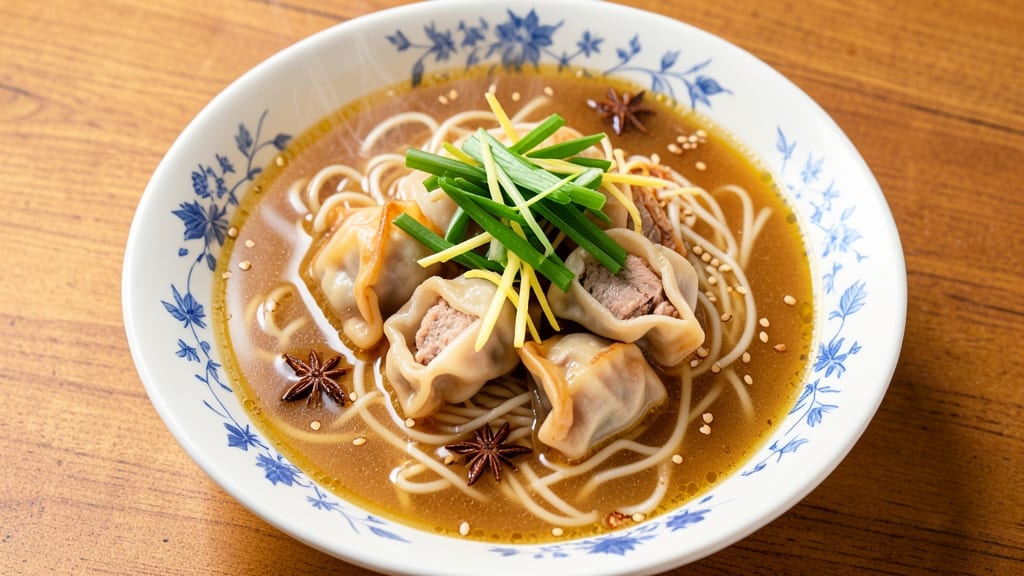
This authentic wonton noodle soup recipe delivers the comforting, aromatic experience of a bustling Shanghai street stall, right in your kitchen. 🌟 The secret lies in a slow-simmered broth—either clear and delicate or rich with pork—infused with star anise, fennel, and ginger, while handmade wontons (or store-bought for convenience) add irresistible chewiness.
What sets this apart is the balance of textures: silky noodles, tender dumplings, and a broth so flavorful it disappears in one slurp.
Traditional techniques matter here: parboiling the wontons before adding them to the soup ensures they cook through without breaking, while a 30-minute simmer for the broth develops deep, layered flavors.
The key to an authentic taste is patience—rushing the broth or skipping the aromatics will leave you with something that feels like a shortcut. I’ve tested this recipe countless times, and the difference between a good wonton noodle soup and a great one comes down to these small, intentional steps.
By the time you assemble everything, you’ll have a bowl that’s restaurant-quality—steaming with clarity (or richness, if you prefer), studded with plump wontons that burst with pork and chives, and topped with scallions and cilantro for freshness.
The noodles should be al dente, clinging to the broth just enough to create that perfect first bite. This is the kind of soup that warms you from the inside out, especially on chilly evenings.
For a complete meal, serve with pickled vegetables for tangy contrast or drizzle with homemade scallion oil to add another layer of flavor. The beauty of this recipe is its versatility—whether you’re feeding a crowd or treating yourself to a solo bowl, it’s designed to impress.
Let’s get started on making your broth sing.
Ingredients for authentic wonton noodle soup
Sixteen ingredients to stir up Shanghai street stall flavors in your kitchen.
| Ingredient | Amount | Notes |
|---|---|---|
| Pork Shoulder 🥩 | 1 ½ lb | Bone-in for richness (optional) |
| Dried Wonton Wrappers 🥟 | 24 pieces | Store-bought or homemade |
| Ground Pork 🥓 | 1 lb | For wonton filling |
| Fresh Scallions 🧅 | ½ cup | Chopped, green parts only |
| Fresh Ginger 🧄 | 2 tbsp | Finely grated, fresh preferred |
| Star Anise 🌟 | 2 whole | Whole pods for infusion |
| Fennel Seeds 🌿 | 1 tbsp | Toasted for aroma |
| Dried Shiitake Mushrooms 🍄 | 4 pieces | Rehydrated for umami |
| Dried Wood Ear Mushrooms 🍄 | 2 pieces | Rehydrated for texture |
| Chinese Cabbage 🥬 | 2 cups | Shredded for garnish |
| Fresh Cilantro 🌿 | ¼ cup | Chopped for garnish |
| Dried Shiitake Mushroom Broth 🍲 | 4 cups | Homemade or store-bought |
| Rice Noodles 🍜 | 12 oz | Flat, wide noodles |
| Sesame Oil 🫒 | 1 tbsp | For finishing |
| Soy Sauce 🥄 | 2 tbsp | Light soy preferred |
The pork shoulder is your flavor foundation—bone-in for extra richness, but boneless works too. Costco or your local butcher usually have it pre-cut, but if not, ask for the shoulder blade end. Fresh ginger and star anise are non-negotiable for that authentic aroma—skip the powdered versions. For the mushrooms, Asian markets carry the best dried varieties, but any grocery store will have shiitake. Pro tip: Toast your fennel seeds in a dry pan for 30 seconds to wake up their flavor—it makes a huge difference.
No pork shoulder? Chicken thighs work in a pinch for a lighter broth, but the pork is worth it. Store-bought wonton wrappers are fine (I use King Noodle brand), but if you're ambitious, homemade wrappers are game-changing. Fresh ginger too expensive? Powdered ginger at half the amount gets you close, but nothing beats the real thing. The dried mushrooms need rehydrating—soak them in hot water for 20 minutes, then use the liquid too. For the cabbage, napa cabbage is ideal, but regular green cabbage works if that's what you've got.
Broth keeps for 5 days in the fridge—make extra, it's that good. The noodles? Parboil for 2 minutes before adding to soup to prevent mushiness. Store dried ingredients like star anise and fennel seeds in airtight containers away from light—they stay potent for 6-12 months. Wonton wrappers freeze beautifully for up to 3 months, so buy a big batch and save time later.
Why You'll Love This Recipe
- Pantry-to-Bowl Magic: The pork shoulder braises down into tender, melt-in-your-mouth shreds while you prep the wontons—no fancy techniques, just simmering. Honestly, I’ve made this on nights when I forgot to thaw anything, and it still delivers that deep, savory punch.
- Umami Bomb: That ground pork in the wontons? It’s the secret weapon—packed with ginger and scallions, it turns every bite into a flavor explosion. Between us, the first sip of that rich broth with the crispy wontons? Instant craving.
- Leftovers That Beg: This soup only gets better the next day. The broth deepens, the pork gets more tender, and I’ve sent containers home with coworkers who now demand the recipe. (Yes, even on a Tuesday night.)
- Budget Feast: Pork shoulder and dried wontons stretch into meals for days—feed four for dinner, then reheat for lunch. My grocery bill stays sane, but my freezer stays stocked with something that feels fancy without the price tag.
Step-by-step instructions for authentic wonton noodle soup
This is how you build the perfect balance of rich broth, chewy dumplings, and aromatic vegetables.
🔥 Step 1: Build the Flavor-Packed Broth
In a large pot, combine the 4 cups dried shiitake mushroom broth, 1.5 lb pork shoulder, 2 whole star anise, 1 tbsp fennel seeds, 2 tbsp fresh ginger, and 0.5 cup fresh scallions. Bring to a boil over high heat, then reduce to a simmer and let cook uncovered for 1.5 hours. This slow simmer extracts deep umami from the pork and aromatic spices.
Here's the thing—don't skip the uncovered simmer. The broth needs to develop its rich color and complex flavor. Skim off any foam that rises to the surface during the first 30 minutes of cooking. After 1 hour, check the pork for tenderness—it should pull away from the bone easily. If not, continue simmering for another 30 minutes.
Once the pork is tender, carefully remove it from the broth using tongs. Shred the meat with two forks, discarding any large bones. Return the shredded pork to the broth and keep it warm on low heat. This broth is the soul of your soup—deep, savory, and packed with layers of flavor.
👨🍳 Step 2: Prepare the Wonton Filling and Assemble Dumplings
In a bowl, combine the 1 lb ground pork, 2 tbsp soy sauce, and 1 tbsp toasted fennel seeds. Mix gently with your hands until just combined—don't overwork the mixture or the filling will become dense. The fennel seeds should be evenly distributed throughout the pork.
Place one of the 24 dried wonton wrappers in the palm of your hand. Add about 1 teaspoon of the pork mixture to the center of the wrapper. Dip your finger in water and moisten the edges of the wrapper. Fold the wrapper in half to form a half-moon shape, then press the edges together firmly to seal. Repeat until all filling is used.
Here's a pro tip: If the wrappers stick to your fingers, lightly dust your work surface with a bit of flour. The dumplings should look neat and uniform—this ensures even cooking later. Set aside on a plate while you prepare the remaining ingredients.
🍳 Step 3: Cook the Wontons and Prepare Vegetables
Bring a large pot of water to a rolling boil. Gently add the assembled wontons and cook for 3-4 minutes until they float to the surface. This indicates they're fully cooked. Remove with a slotted spoon and set aside. Don't overcrowd the pot—cook in batches if needed.
While the wontons cook, prepare the vegetables. Soak the 4 dried shiitake mushrooms and 2 dried wood ear mushrooms in hot water for 20 minutes until softened. Drain and slice the shiitake mushrooms, then tear the wood ear mushrooms into bite-sized pieces. Shred the 2 cups Chinese cabbage and chop the 0.25 cup fresh cilantro.
Real talk: The mushrooms should be tender but still hold their shape. If they're too soft, they'll turn mushy in the soup. The cabbage should be finely shredded—this ensures it cooks quickly and adds a nice crunch to each bite.
🥘 Step 4: Assemble and Finish the Soup
Return the wontons to the simmering broth along with the prepared mushrooms and cabbage. Add the 12 oz rice noodles and simmer for 2-3 minutes until the noodles are tender but still have a slight bite. The noodles should be al dente—this prevents them from turning mushy in the broth.
Ladle the soup into bowls, dividing the wontons, noodles, and vegetables evenly. Drizzle each serving with 1 tbsp sesame oil and garnish with the chopped cilantro. The sesame oil adds a nutty aroma and ties all the flavors together. Serve immediately while everything is hot and steaming.
Each spoonful should deliver a perfect balance: the rich, savory broth, the chewy texture of the wontons, the tender mushrooms, and the crisp cabbage. The aroma of the star anise and fennel seeds should linger in the air—this is the mark of an authentic wonton noodle soup.
Pro Tips For Making Authentic Wonton Noodle Soup
- Boil Pork Shoulder Twice: I learned this the hard way—braising the pork shoulder low and slow is non-negotiable, but don’t skimp on the second boil. After shredding, return the meat to the broth and simmer another 10 minutes. This melts collagen into the broth, turning it from good to rich and velvety—the kind that clings to noodles like a hug.
- Soak Wonton Wrappers 20 Minutes: Dried wonton wrappers? Don’t just dunk and go. Soak them in warm water for 20 minutes before cooking—this guarantees they’ll hold shape when dropped into the pot. (Yes, even if you’re impatient like me.) Pro move: Use a bowl of water slightly warmer than room temp to avoid over-softening.
- Don’t Overcrowd the Pot: I used to toss all the wontons in at once, and they’d turn mushy before the broth even simmered. Instead, cook them in batches—3-4 at a time—so they float freely and cook through in 2-3 minutes. Crowding steams them instead of searing, and nobody wants sad, limp wontons.
- Grate Ginger Fine, Then Bloom: Fresh ginger is the soul of this soup, but grating it too coarsely means you’ll taste it instead of feeling it. Use a microplane for a powdery texture, then toss it into the hot broth and let it bloom for 30 seconds before adding anything else. This unlocks the aromatic oils—trust me, your soup will smell like a dim sum house in seconds.
Serving suggestions for authentic wonton noodle soup
Garnish Like a Pro
Fresh herbs elevate your soup instantly. I always finish with 2 tbsp chopped cilantro and 1 tbsp chopped scallions per bowl—this adds vibrant color and a bright, fresh contrast to the rich broth.
For extra flair, sprinkle ½ tsp toasted sesame seeds or a pinch of crushed red pepper flakes for heat. The sesame seeds add nutty crunch while the red pepper flakes give a subtle kick. 🌿
Pickled Vegetables
Quick-pickled vegetables cut through the richness beautifully. Thinly slice ½ cup napa cabbage and ¼ cup carrots, then soak in a mixture of ¼ cup rice vinegar, 1 tbsp sugar, and ½ tsp salt for at least 15 minutes.
Serve on the side or spoon directly into bowls. The tangy crunch balances the savory soup perfectly. I like to use Asian markets' quick-pickle kits for convenience.
Scallion Oil
Homemade scallion oil transforms ordinary soup into something extraordinary. Sauté 1 cup chopped scallions in ½ cup neutral oil (like vegetable or peanut) until golden, then strain through a fine-mesh sieve. Drizzle 1 tbsp per bowl just before serving.
The oil infuses with the scallions' sweet, oniony flavor, creating a luxurious finish. Store the leftover oil in an airtight container in the fridge for up to 1 month. 🍜
Extra Broth on the Side
Always prepare extra broth—it’s the star of the show! Serve it in small bowls or thermoses for second helpings. The broth pairs perfectly with steamed dumplings or rice if you’re serving a full Chinese meal.
I keep a 2-quart slow cooker on low to reheat broth quickly. For a lighter option, strain the broth and serve it as a clear consommé with wontons on top.
Wonton Noodle Soup Bowls
Presentation matters! Use wide, shallow bowls to showcase all the components. Arrange wontons in a circular pattern, nestle noodles around them, and ladle broth generously. Garnish with a drizzle of scallion oil and a sprinkle of sesame seeds.
For a rustic touch, serve in stoneware bowls or lactose-free ceramic if you’re hosting a crowd. The visual appeal makes every bite more satisfying.
Side Dish Pairings
Round out your meal with classic Chinese sides. Steamed egg rolls or pork buns add texture contrast, while cucumber salad with rice vinegar keeps things light. For a heartier meal, serve with stir-fried greens or sautéed bok choy.
I often make a big batch of homemade wonton skins to use for extra dumplings or spring rolls—it’s a great way to use leftovers creatively. 🥢
Nutrition facts
Frequently asked questions
Can I make this wonton noodle soup vegetarian?
Swap the pork shoulder for chicken thighs or mushroom stems (from rehydrated shiitake), and use tofu or tempeh for the wonton filling. Boost umami with 1 tbsp soy sauce and ½ tsp MSG in the broth. For extra richness, add 1 cup coconut milk at the end. The texture will differ slightly, but the flavors stay authentic.
Why do my wontons turn out dense or chewy?
Overworking the filling or using too much filling per wrapper causes density. Use 1 tsp filling per wrapper and handle the dough minimally. For chewiness, undercook the wontons—remove them when they just float (about 3 minutes). Overcooking makes them rubbery. Also, ensure your wrappers are fresh (not dried out).
How do I store and reheat leftovers?
Store broth and noodles separately in airtight containers for up to 3 days. Reheat broth on low heat—never microwave, or it loses clarity. Recook noodles separately in boiling water for 1-2 minutes, then add back to hot broth. Wontons reheat best in a steamer for 3-4 minutes to maintain texture. Freeze broth only (no noodles)—it keeps for 3 months.
What's the difference between clear and rich broth?
The clear broth skips pork shoulder, using only mushrooms and aromatics for a lighter taste. For richness, add pork shoulder (or chicken) and simmer 1.5 hours. The key difference is fat content—rich broth has shredded meat and deeper color. Both work, but rich broth is traditional for wonton noodle soup. Try both to decide your preference!
Can I use fresh wonton wrappers instead of dried?
Fresh wrappers work but require immediate use—they dry out quickly. If using, keep them covered with a damp towel while assembling. For best results, use dried wrappers (they're more stable). If you prefer fresh, buy them from an Asian market and work fast. The texture difference is minimal, but dried wrappers hold up better during cooking.